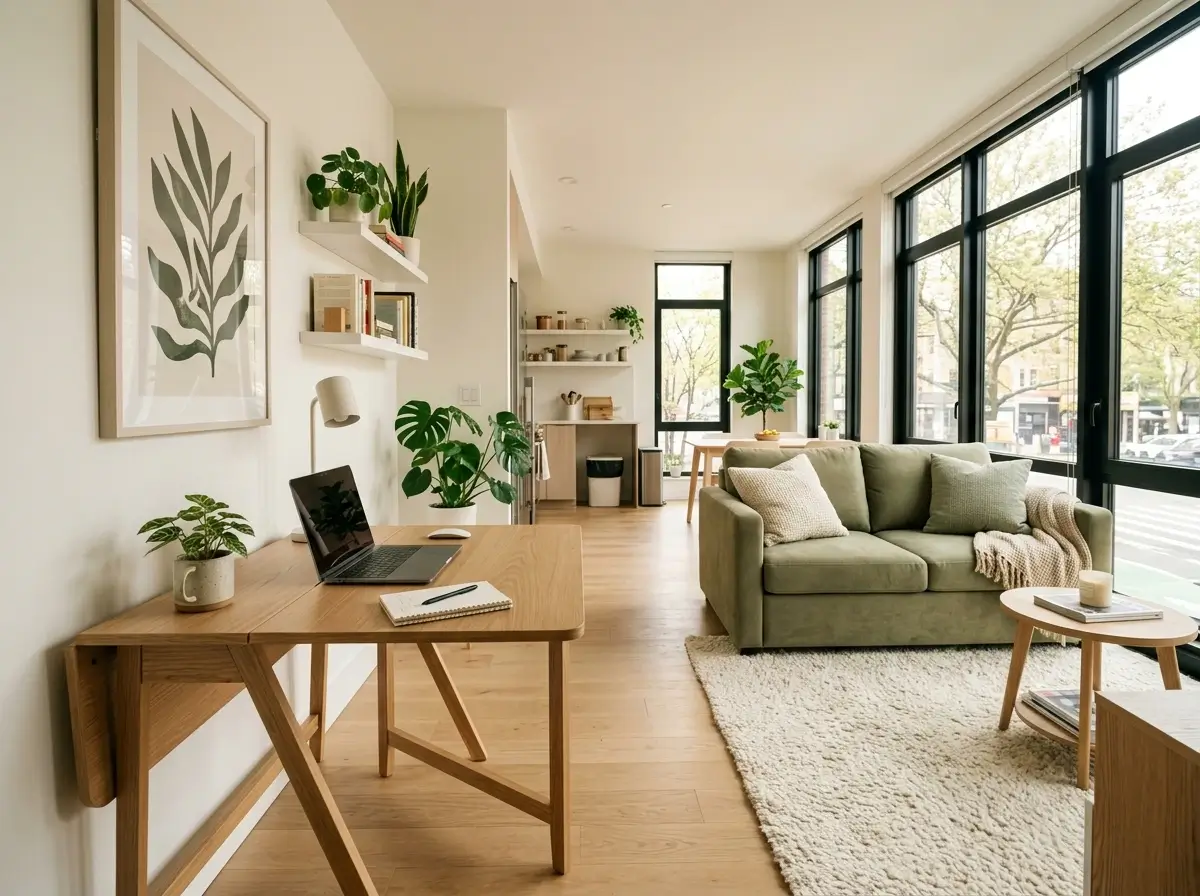
Living in an open-concept apartment offers gorgeous natural light and plenty of breathing room, but it also creates a major organizational challenge.
When your living room, dining area, and potential workspace all share the same four walls, establishing boundaries can feel impossible without losing your security deposit.
A common mistake is trying to force traditional room layouts into a wall-less environment. Instead of fighting the architecture, the best open flex room ideas embrace adaptability.
Whether you need a work-from-home sanctuary that disappears at dinner time, a weekend guest space, or a dedicated yoga corner, you can achieve it all with strategic placement and temporary solutions.
In this guide, we will explore exactly how to zone, furnish, and acoustically balance your open floor plan—without picking up a drill or building a single permanent wall.
Planning Your Open Flex Room Ideas Without Building Walls
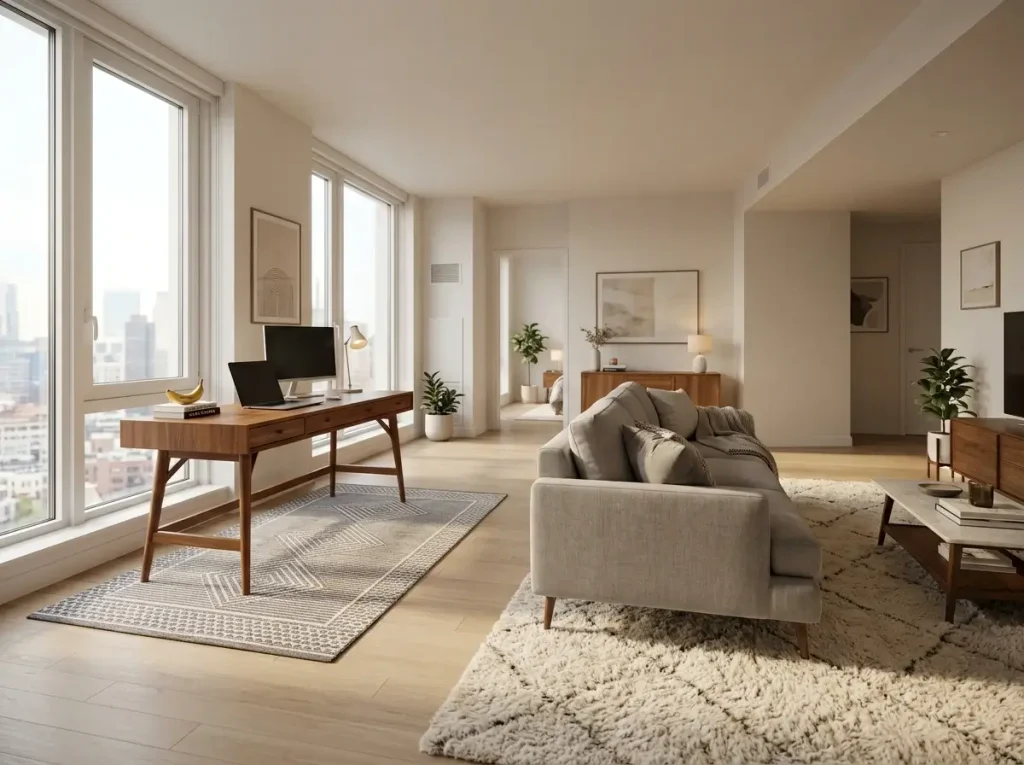
When you first move into a large, undefined loft or studio, the lack of walls can be both a blessing and a curse.
Having a blank canvas is exciting, but executing your open flex room ideas without a solid plan often leads to a cluttered, confusing layout. Before you start buying new furniture or pushing heavy pieces around, you need to establish foundational layout principles.
The very first step is mapping out your apartment’s natural traffic flow. A common mistake is creating “zones” that inadvertently block the main pathways to the kitchen, bathroom, or front door.
- Trace your daily routes: Take a walk through your empty space and note the most direct routes between essential areas.
- Mark the floor: Consider using renter-safe painter’s tape on the floor to outline where these “invisible hallways” should naturally fall.
- Leave breathing room: Always leave at least 36 inches of clearance for main walkways to ensure the apartment remains comfortable to navigate.
Once your pathways are clear, you can start building distinct functional areas without constructing a single permanent wall.
Anchoring with Rugs
One of the most cost-effective open flex room ideas is using oversized area rugs to anchor different functions. In a wall-less environment, the floor becomes your primary tool for visual separation.
Instead of letting your furniture float aimlessly, group specific pieces over distinct rugs. For example, place a plush, high-pile rug under your living room sofa and coffee table to signal a zone meant purely for relaxation.
A few feet away, you can use a flat-weave or low-pile rug under a desk to designate your workspace. The deliberate change in texture and color instantly communicates to your brain that you have stepped into a completely new “room.”
The “Sofa-Back” Boundary
The best open flex room ideas utilize the furniture you already own to create distinct zones. You do not always need to buy specialized room dividers to effectively break up a large, open space.
Instead, rely on the strategic placement of low-profile furniture. Positioning the back of your sofa to face your dining area or home office creates an immediate, intuitive visual boundary.
You can reinforce this line by placing a low, open-backed bookshelf or a sleek console table directly behind the sofa. This trick separates the room while preserving beautiful natural light and maintaining the airy feel of the apartment.
Of course, some living situations require a bit more privacy. If visual zoning isn’t providing enough separation for a chaotic workspace or a guest bed, you might need to explore physical temporary room divider options.
Embracing Modular Layouts
Ultimately, successful open flex room ideas rely on modularity and adaptability. Your apartment’s layout shouldn’t be permanently locked into one configuration, especially if you love to host friends.
When planning your zones, prioritize lightweight, easy-to-move furniture. Nesting tables, rolling carts, and lightweight accent chairs allow you to easily shift your layout when entertaining large groups.
By keeping the space modular, you ensure that your open floor plan remains a dynamic, highly functional home that effortlessly adapts to your changing daily needs.
Open Flex Room Ideas for a Seamless Guest Bedroom
Hosting friends or family in a studio or loft apartment usually ends with someone awkwardly sleeping on a deflated air mattress in the middle of your living room.
When you lack a dedicated spare bedroom, accommodating overnight guests can quickly make your entire apartment feel cluttered and chaotic.
Integrating smart open flex room ideas into your layout means finding ways to host guests without sacrificing your daily living space.
The secret is designing a setup that effortlessly transitions from a stylish living area during the day to a comfortable, private sleeping zone at night.
Upgrading Your Dual-Purpose Seating
A common mistake renters make is relying on bulky, traditional mattresses that take up precious closet space when not in use. The foundation of successful open flex room ideas for guests starts with high-quality, dual-purpose seating.
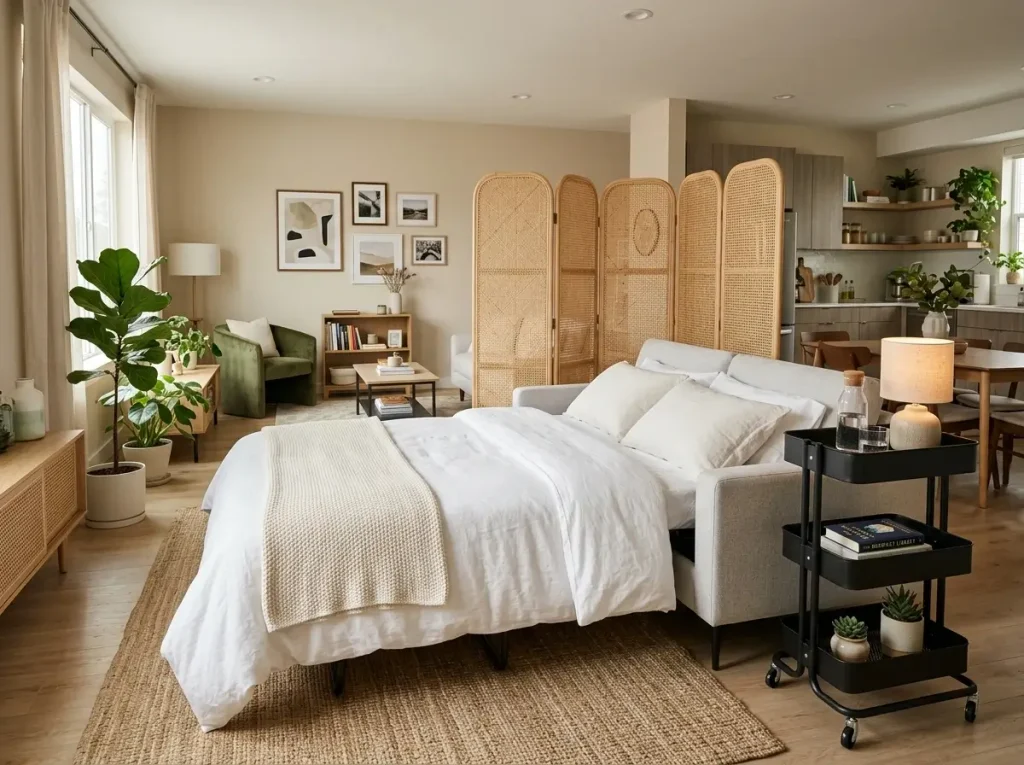
Instead of a standard couch, invest in a modern sleeper sofa or a stylish daybed that acts as normal living room furniture on a daily basis.
Today’s sleeper sofas are designed with compact footprints and vastly improved mattress technology, ensuring your guests sleep well without turning your apartment into a permanent dorm room.
If you prefer a lighter look, a daybed loaded with structured throw pillows offers deep, comfortable seating for movie nights, but seamlessly converts into a twin bed when company arrives.
Creating Temporary Privacy and Storing Linens
Sleeping in the middle of an open floor plan can feel exposed. To make your guests feel comfortable, you need to create temporary visual boundaries that disappear the moment they pack their bags.
- Pop-up privacy screens: Lightweight, folding shoji screens or rattan room dividers can be set up around the sleeper sofa at night to give guests their own dedicated “room.”
- Easy concealment: In the morning, simply fold the screen flat and slide it right under the sofa or tuck it out of sight behind a tall bookcase.
When exploring open flex room ideas, finding a spot to stash bulky guest pillows and heavy blankets can also be a massive headache. Because rental closets are famously tiny, you have to get creative with furniture.
Utilize rolling, under-sofa storage bins to keep extra sheets hidden but instantly accessible. Alternatively, large, stylish storage ottomans can serve as a footrest or coffee table during the week, acting as a secret linen closet when guests arrive.
The “Pop-Up” Nightstand Hack
To truly elevate the guest experience without buying permanent bedroom furniture, rethink how you use mobile storage. A three-tier rolling cart—the kind typically used for kitchen pantry overflow or office supplies—makes a perfect temporary nightstand.
When guests arrive, simply clear the top tier, plug in a small reading lamp, and roll it next to the sleeper sofa. You can leave fresh towels, the WiFi password, or a carafe of water on the lower shelves. In the morning, just roll the cart back to its usual spot.
Executing these open flex room ideas ensures your open-concept apartment remains beautifully uncluttered during the day, while still offering a welcoming, organized sanctuary for visitors at night.
Work-From-Home Open Flex Room Ideas That Disappear After 5 PM
Working from home in an open-concept layout often means you never mentally “leave” the office.
When your laptop, monitor, and piles of paperwork are staring at you from across the living room while you try to relax on the couch, it is virtually impossible to unplug. A lack of visual separation can quickly lead to burnout.
Therefore, the most effective open flex room ideas for remote workers focus heavily on concealment and establishing firm psychological boundaries.
The Magic of the Secretary Desk and the “Cloffice”
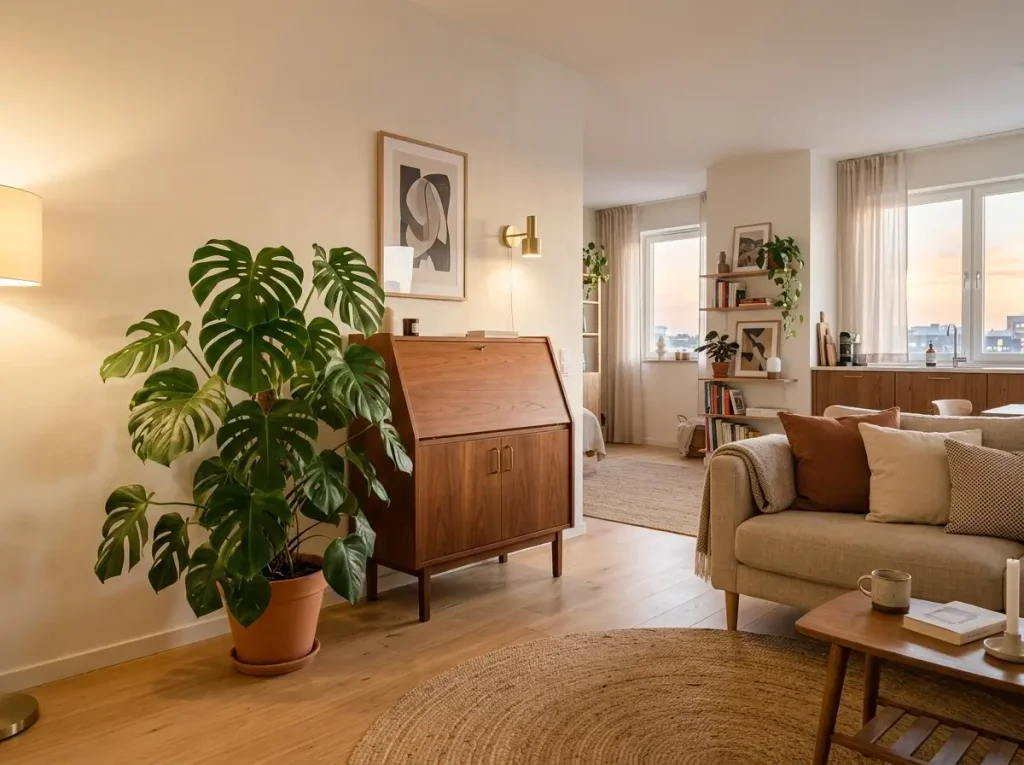
Instead of a sprawling, traditional office desk that dominates your entire floor plan, look for furniture that visually closes. A modern secretary desk is a brilliant solution for wall-less apartments.
It provides a sturdy, practical work surface and internal shelving during the day, but the main desk compartment folds entirely shut at 5 PM. This instantly hides your monitor, sticky notes, and scattered papers from view.
If your apartment happens to feature a small adjacent closet, you can implement one of the most popular open flex room ideas: the “cloffice” or closet office. By temporarily removing the hanging rod and sliding a compact desk inside, you can literally shut the door on your workday.
You can even use renter-friendly peel-and-stick wallpaper and a battery-powered sconce to make the tiny space feel intentional.
The exact same concealment principles apply whether you are working a corporate nine-to-five or setting up a small craft room in the corner of your living area.
Ergonomics in Small Spaces
When prioritizing temporary or compact setups to save space, renters frequently sacrifice their physical health. Hunching over a laptop on your coffee table or working from a tiny folding dining chair might seem like a clever space-saving hack, but it will quickly ruin your posture.
When exploring open flex room ideas, you must still prioritize proper lumbar support and correct screen height.
Look for ergonomic desk chairs designed to look like stylish accent chairs, and utilize portable monitor risers that can be easily stashed away in a drawer.
Before settling on a desk and chair combination, you should always reference government guidelines on maintaining proper posture and computer workstation ergonomics to ensure your temporary setup won’t cause long-term back pain.
Mobile Office Storage and Visual Blockers
If you cannot completely hide your physical desk, you must hide the visual clutter it attracts. A rolling filing cabinet or a tiered mobile cart is perfect for organizing your workday necessities.
When you clock out, simply roll the cart underneath your desk or tuck it into a nearby corner out of your direct line of sight.
Additionally, managing the “digital clutter” of messy cables goes a long way in making a space feel less like a cubicle. Use under-desk cable management trays that stick on with heavy-duty adhesive rather than screws.
Finally, you can strategically place a large, leafy potted plant—like a Monstera or Ficus—next to your desk area. This serves as a soft, natural visual blocker during the evening.
Successfully implementing these open flex room ideas ensures your apartment remains a relaxing, restorative home rather than a 24-hour workspace.
Renter-Friendly Acoustic Treatments for Large Open Spaces
When planning your open flex room ideas, acoustics are usually an afterthought. Most renters focus entirely on visual layouts and furniture placement, completely forgetting how sound behaves in a large, unpartitioned space.
Because loft apartments and open-concept studios lack interior walls, they are essentially giant echo chambers. Hardwood floors, expansive windows, and bare drywall allow soundwaves to bounce continuously.
If you are watching television in the living area while your partner tries to read at the dining table, the noise transfer can quickly become overwhelming.
However, some of the most impactful open flex room ideas involve managing the invisible layout of sound to improve your daily comfort and focus.
The Basics of Ambient Echo Reduction
Before you start buying specialized equipment, it helps to understand basic sound mitigation. You do not need to build a professional recording booth; you simply need to introduce soft, porous materials that absorb soundwaves rather than reflecting them.
It is important to note that reducing everyday ambient echo is entirely different from dampening sound for noisy hobbies, which requires much more targeted acoustic isolation techniques.
For general living spaces, simply adding thick area rugs, upholstered furniture, and oversized canvas wall art will make a noticeable difference in how sound travels across the room.
Installing Drill-Free Acoustic Panels
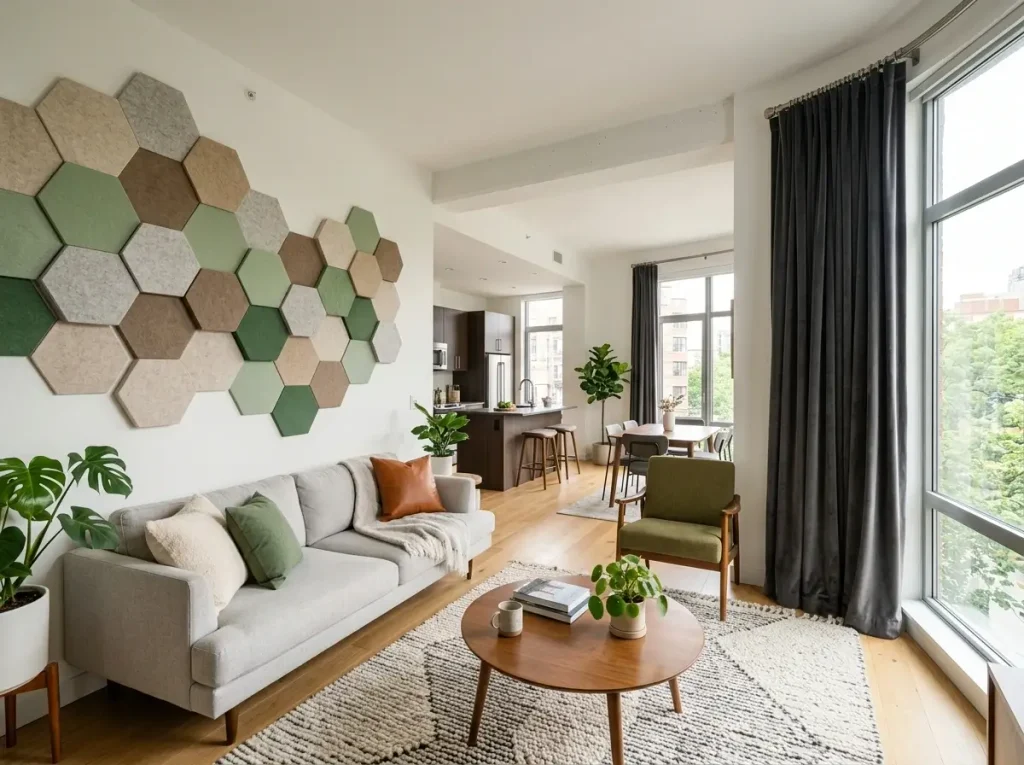
If rugs and pillows are not enough, a brilliant addition to your open flex room ideas is installing drill-free acoustic panels.
Modern acoustic panels are no longer ugly foam egg crates; they come in stylish hexagonal shapes, faux-wood slats, and beautiful fabric finishes that look like modern art.
Because you cannot screw heavy soundproofing boards into rental drywall, opt for lightweight, felt-based acoustic panels.
- Use heavy-duty adhesive: Secure them directly to large, flat walls using removable heavy-duty adhesive strips (like Command strips).
- Target the reflection points: Place these panels directly opposite your main noise sources, such as across from your television or behind your desk speakers, to catch the soundwaves before they bounce.
Sound-Dampening Curtains and Tension Rods
Another highly effective strategy for acoustic control involves window treatments. Hard glass windows are notorious for bouncing high-frequency noises around an open room.
Swap out your flimsy apartment blinds for thick, heavy-duty, sound-dampening curtains. If you are not allowed to drill curtain rod brackets into the wall, invest in industrial-strength tension rods that wedge securely inside the window frame.
Furthermore, these thick curtains can actually double as temporary spatial dividers if you mount a tension rod across a hallway or alcove opening.
Incorporating these open flex room ideas will dramatically soften your apartment’s acoustics. Following authoritative indoor noise reduction guidelines ensures that your open-concept living space remains a peaceful, low-stress environment for both work and relaxation.
Fitness and Wellness Open Flex Room Ideas for Active Renters
When you live in a sprawling, wall-less loft or studio apartment, finding the motivation to work out can be surprisingly difficult if your equipment is buried in a tiny hallway closet.
Conversely, leaving a giant, utilitarian stationary bike parked in the middle of your dining area completely ruins the carefully curated aesthetic of your home.
If you want to maintain a healthy lifestyle without turning your entire apartment into a sweaty commercial gym, you need a strategic approach. Implementing fitness-focused open flex room ideas means striking a perfect balance between daily accessibility and visual harmony.
The Importance of Accessible Movement Space
To consistently meet national physical activity guidelines, your home environment needs to actively support daily movement.
A common mistake renters make is hiding their workout gear so deeply out of sight that the mere setup process takes more effort than the actual exercise routine.
If you have to move your coffee table and drag a heavy box out of the closet just to stretch, you will likely skip the workout altogether.
The most effective open flex room ideas prioritize maintaining a permanent, clear pocket of floor space.
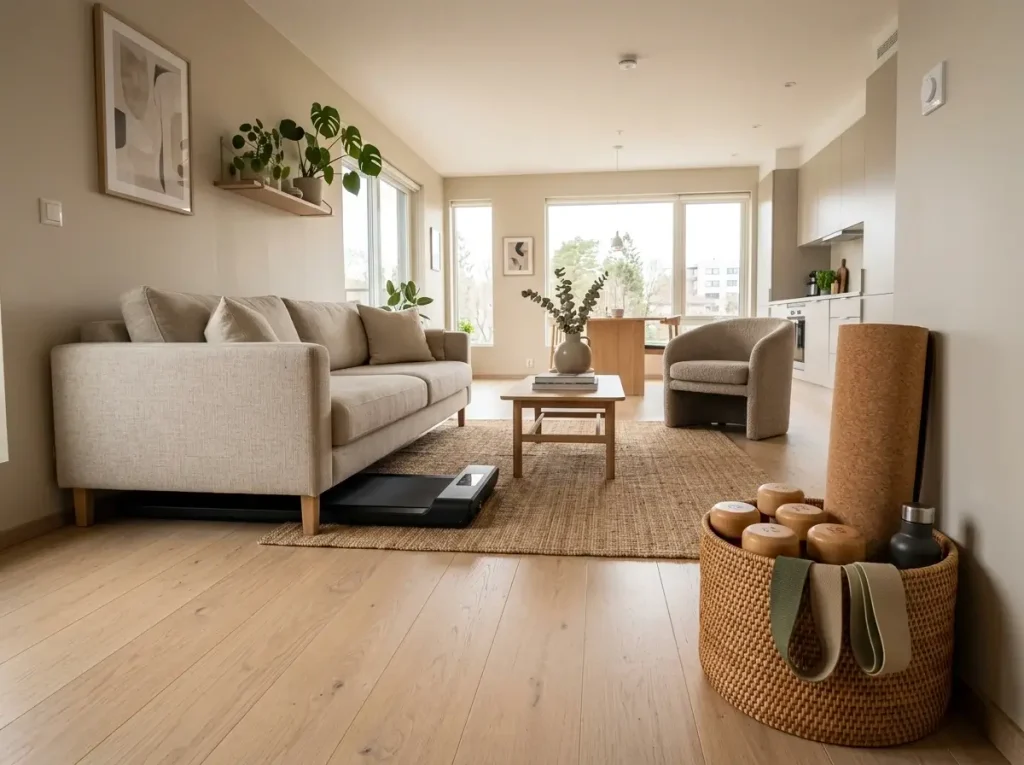
Dedicate a specific area—perhaps the empty space right beside your sofa or a wide walkway near the window—where a yoga mat can be unrolled instantly without rearranging any heavy furniture.
Choosing Aesthetically Pleasing Fitness Gear
Because open-concept layouts lack doors to hide your clutter, any equipment you leave out will instantly become part of your living room decor.
One of the simplest yet most transformative open flex room ideas is intentionally swapping out harsh, neon-colored weights for visually neutral alternatives.
Instead of standard black iron or bright plastic, opt for elegant wooden dumbbells, soft cork yoga blocks, and natural rubber mats in muted, earthy tones.
When your fitness gear seamlessly matches your apartment’s warm color palette, it feels like an intentional interior design choice rather than an accidental pile of gym accessories.
Stylish Storage and Foldable Cardio Equipment
Even the most beautiful exercise equipment needs a designated home when the workout is finished. To keep your floor plan clear, use a large, high-quality woven basket to corral your resistance bands, massage balls, foam rollers, and lightweight gear.
If you place this stylish basket right next to your television console or bookshelf, guests will simply assume it holds extra throw blankets.
For cardio enthusiasts, massive, permanent treadmills are usually out of the question in a rental. Instead, modern open flex room ideas rely heavily on ultra-compact, foldable technology. Invest in a slim, low-profile walking pad or a foldable water rowing machine.
These brilliant pieces of engineering can slide effortlessly under your sleeper sofa or stand vertically behind a room divider, ensuring your open layout remains spacious, peaceful, and totally uncluttered during your rest days.
Freestanding Storage Solutions for Open Layouts
When searching for the best open flex room ideas, the biggest hurdle you will likely face is the absolute lack of built-in closets. Open-concept apartments prioritize airy aesthetics over practical storage. This means you have to bring your own closets into the space.
If you are not careful, a studio apartment can quickly start to look like a messy warehouse rather than a cohesive home. The most successful open flex room ideas treat freestanding furniture not just as a place to put things, but as temporary architectural features.
By selecting the right freestanding pieces, you can organize your life without ever risking your security deposit with drill holes.
Modular Shelving as Architectural Anchors
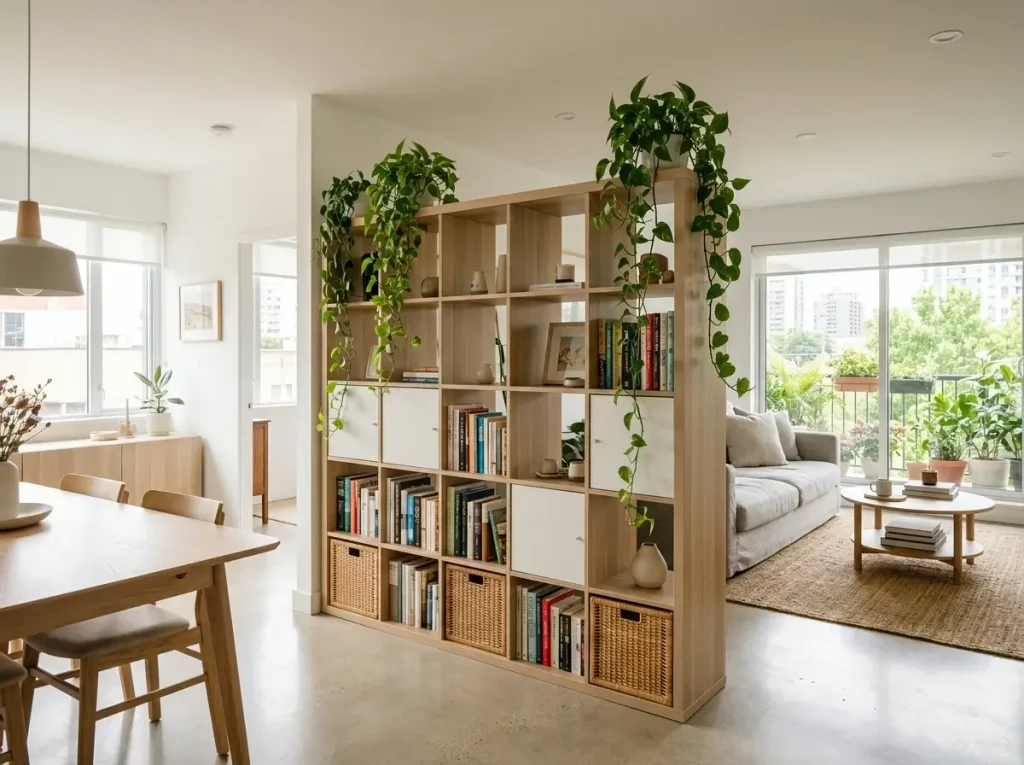
Utilizing heavy, freestanding modular shelving units is one of the smartest ways to fake a wall in an open floor plan. Pieces like large cube organizers or modular wood shelving systems act as both massive storage solutions and visual anchors for the entire room.
When you place a large, open-backed shelving unit perpendicular to a wall, it instantly creates a hallway or a designated “room” behind it. However, the secret to making this work visually is mixing your storage types.
If every shelf is filled with loose items, the unit will look chaotic and stressful. You must mix open display shelves with closed cabinet inserts, sleek drawer add-ons, or fitted woven baskets.
This allows you to hide ugly visual clutter—like tax documents or spare charging cables—while beautifully displaying trailing plants and curated books on the open tiers.
Innovative Tension-Pole Shelving
If you want to utilize vertical space without the bulky footprint of a massive bookcase, tension-pole shelving systems are an incredible alternative. These modular systems use strong, spring-loaded poles that wedge securely directly between your floor and the ceiling.
Incorporating tension-pole systems into your open flex room ideas is a brilliant way to draw the eye upward and maximize the height of your apartment. Because they do not rely on heavy side panels, they let natural light pass right through them.
You can attach adjustable floating shelves or even small desk components to the tension poles. This gives you a massive amount of storage for books and decor without requiring a single nail or screw in the rental drywall.
Safety First: Stabilizing Tall Furniture Without Wall Damage
Before finalizing your open flex room ideas, you must consider the safety implications of tall, heavy furniture. The critical importance of stabilizing tall furniture cannot be overstated, especially when you cannot use the traditional drill-in wall anchors required by most landlords.
A common mistake is loading heavy items on the top shelves of a freestanding unit, making it dangerously top-heavy.
Always place your heaviest items—like hardback books, file boxes, or dumbbells—on the very bottom shelves to naturally lower the center of gravity.
Furthermore, you should carefully review national furniture tip-over safety standards to understand the risks.
For a renter-friendly solution, look into heavy-duty tension anchors or discrete furniture wedges that tilt the unit slightly backward against the wall, ensuring your storage remains safe, stable, and completely damage-free.
Conclusion
Designing a functional home in an open-concept apartment doesn’t require breaking your lease or sacrificing your security deposit. By implementing these open flex room ideas, you can transform a single large room into a highly organized, multi-purpose sanctuary.
Start by analyzing your daily routine and using area rugs to define your most important zones. From there, introduce dual-purpose furniture and acoustic treatments to keep the space comfortable and adaptable.
If you are looking to take your renter-friendly upgrades a step further, explore our guide on 10 DIY Small Craft Room Ideas for more layout inspiration.
The beauty of an open floor plan is its flexibility—embrace temporary solutions, and your apartment can effortlessly evolve right alongside your lifestyle.