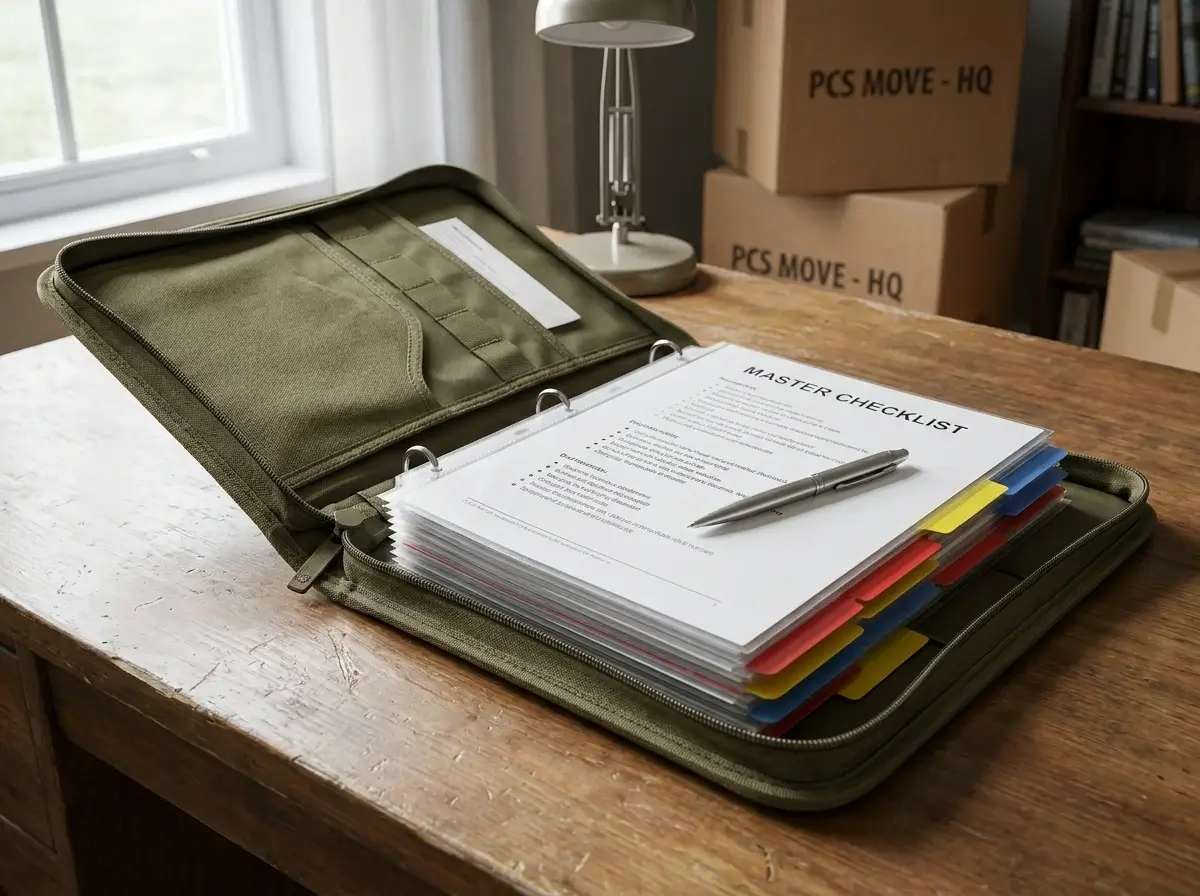
Military moves involve a staggering amount of paperwork.
From transportation logs to medical clearances, a single missing document can bring your relocation to a sudden halt. That is where your master moving binder comes in.
But buying a binder is only half the battle. The real challenge is knowing exactly what to put in a PCS binder so you are fully prepared when the moving truck pulls up.
Many military families find out too late that they packed crucial records in the bottom of a household goods box. “Do not pack your official records” is standard military advice, but what exactly qualifies as an official record?
Whether you are crossing state lines or heading overseas, this guide breaks down every essential document you need to hand-carry during your Permanent Change of Station.
Why Knowing Exactly What to Put in a PCS Binder Matters

Let’s face it: military moves are inherently chaotic. Between clearing base housing, coordinating travel, and managing family logistics, the sheer volume of required paperwork can feel completely overwhelming.
That is exactly why understanding what to put in a PCS binder is a non-negotiable part of relocation prep.
Your Ultimate Portable Filing Cabinet
A master moving binder serves one core purpose. It acts as your family’s portable filing cabinet for the essential documents you absolutely cannot afford to lose or wait for during transit.
When you arrive at your new duty station, you will need immediate access to specific records to get your life started again. Base housing offices will ask for multiple copies of your orders. The local medical clinic will need your healthcare clearance forms. New schools will require hard copies of transcripts and up-to-date shot records.
If those documents are sitting in a cardboard box on an eighteen-wheeler somewhere across the country, your entire in-processing timeline grinds to a halt.
Knowing exactly what to put in a PCS binder ensures that you have immediate, organized access to your life’s most critical paperwork.
Many service members find out the hard way that digital copies are not always enough. You never want to find yourself begging a housing clerk to accept a blurry photo of a marriage certificate on your phone simply because the physical copy is packed away.
Hand-Carried Items vs. Household Goods
A common mistake during a Permanent Change of Station is leaving important paperwork sitting out on a desk or kitchen counter on packing day.
If you are not extremely careful, your transportation service providers (TSPs) will pack those vital documents right alongside your coffee mugs and winter coats. Once an item is boxed up and loaded as part of your household goods, it is completely out of your control.
Depending on the season and your destination, it can take anywhere from a few weeks to several months for your household goods to be delivered.
Your PCS binder is strictly for hand-carried items. These are the documents that travel safely in your personal vehicle, or zipped securely in your carry-on luggage if your family is flying.
Never let your moving binder out of your sight.
By strictly separating your hand-carried essentials from the rest of your household goods, you maintain total control over your most sensitive information. This protects your family from potential identity theft and ensures you can check in at your gaining installation without frustrating administrative delays.
Gathering the Right Organizational Supplies
Of course, figuring out what to put in a PCS binder is only the first part of the equation. You also need a physical system that can withstand the wear and tear of a military move.
Flimsy paper folders or loose documents stuffed into a backpack simply will not survive a multi-day road trip.
Having the right organizational supplies matters just as much as the paperwork itself. You need sturdy tab dividers to separate financial records from medical files, clear sheet protectors for irreplaceable certificates, and a durable zippered binder to keep everything from falling out in the car.
If you need a complete breakdown of the best physical supplies to buy, be sure to check out our step-by-step guide on How to Build a PCS Move Planning Binder You’ll Actually Use.
Once your physical binder is built and ready to go, the next step is actually filling it with the right information.
Official Military Orders and Identification Documents
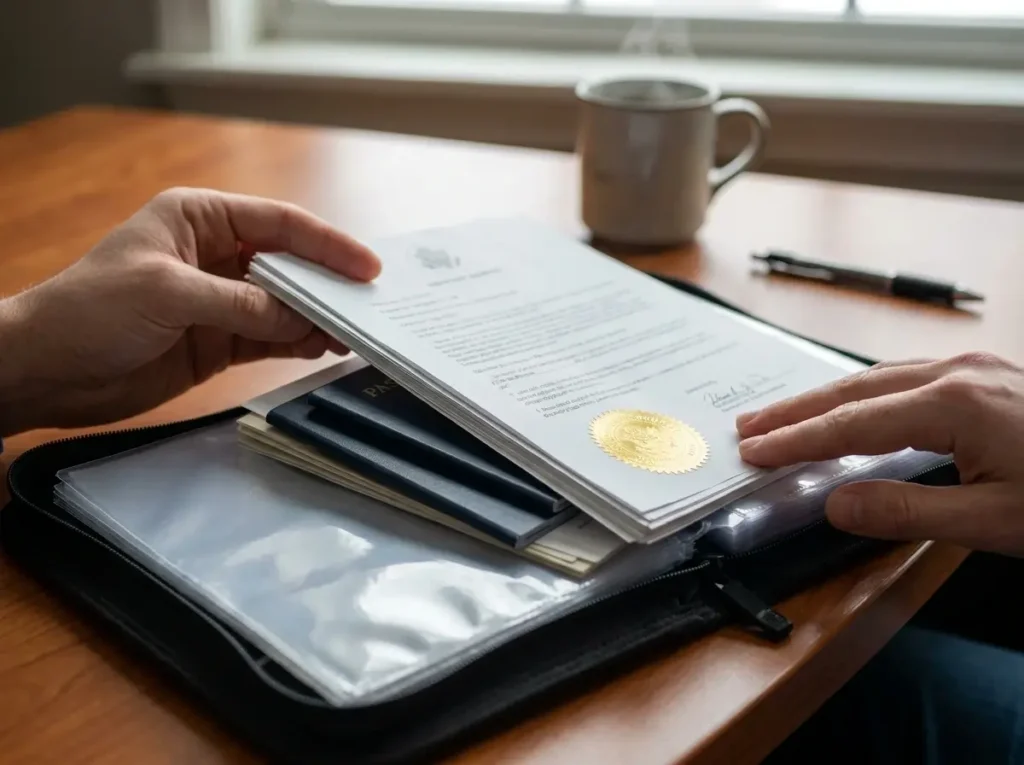
When you start compiling your paperwork and figuring out what to put in a PCS binder, your official military documents and personal identification must be the absolute highest priority.
These forms are the master keys to your relocation. Without them, you cannot secure housing, process your travel pay, or even enroll your kids in school.
Your PCS Orders and Amendments
Let’s start with the most obvious item: your Permanent Change of Station orders.
Many military families assume that keeping a digital PDF on their phone is sufficient, or that one or two printed copies will get the job done. A common mistake is underestimating just how paper-heavy military bureaucracy remains today.
You should print and pack between 10 and 20 hard copies of your orders.
Why so many? Almost every office on your gaining installation will demand a physical copy to keep for their own records. The housing office needs one to assign a home, and the finance office needs one to process your travel vouchers. The transportation office, the base pass and ID office for vehicle registration, and the local medical clinic will all ask for their own copy.
You also need to include every single amendment to those orders.
It is incredibly common for orders to be adjusted, delayed, or corrected after they are initially cut. Keep your original orders securely clipped to any subsequent amendments so the entire timeline of your relocation is completely clear to anyone reviewing your file.
Essential Identification for Every Family Member
Next on the checklist is your family’s personal identification.
When deciding what to put in a PCS binder for identification purposes, follow one simple rule: if a government agency issued it, it belongs in the binder.
Replacing lost identification is a massive logistical headache under normal circumstances. Trying to replace a lost Social Security card while living in temporary lodging and waiting for your mail to forward is incredibly stressful.
Make sure your binder includes the following original documents for every single member of the family:
- Birth certificates: Bring the originals or state-certified copies with the raised seal.
- Social Security cards: These contain highly sensitive Personally Identifiable Information (PII), which is why you must never leave your binder unattended in a vehicle.
- Passports: Even if you are completing a stateside (CONUS) move, passports serve as excellent premium backup identification.
- Naturalization papers: If applicable to anyone in your family, these documents are incredibly difficult to replace and must always be hand-carried.
- Marriage certificates: Finance and housing offices will frequently need to see this to verify your dependent status and basic housing allowances.
Power of Attorney (POA) Documents
Military life is notoriously unpredictable. It is very common for a service member to deploy, head to a temporary duty assignment (TDY), or begin an intensive training school immediately upon arriving at the new duty station.
Because of this reality, Power of Attorney (POA) paperwork is a vital addition to the list of what to put in a PCS binder.
You should visit the base legal office well before your move to draft both general and specific (often called special) POAs.
While a general POA is helpful for broad matters, many military departments refuse to accept them. For example, the transportation office will often require a specific POA for a spouse to legally accept the delivery of household goods. Similarly, the base housing office frequently requires a specific POA to sign a housing lease if the military member is absent.
Having these documents properly notarized and safely stored in your binder ensures that a dependent spouse can easily handle any logistical hurdles, even if the service member is called away on short notice.
Financial and Housing Records to Put in a PCS Binder
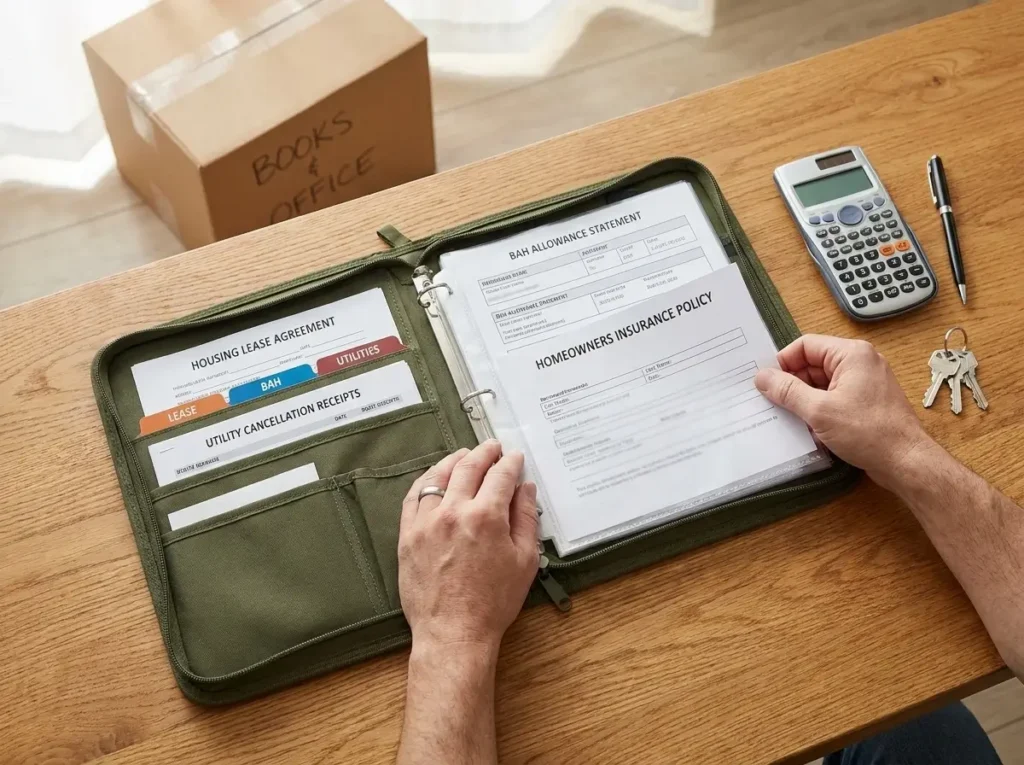
Moving across the country—or across the world—is an expensive endeavor. A smooth financial transition relies entirely on having your housing and money-related paperwork perfectly organized.
When you are finalizing the list of what to put in a PCS binder, financial and housing records are critical for protecting your bank account and ensuring you receive your military entitlements on time.
Housing Contracts and Military Allowances
Whether you are clearing base housing, breaking a civilian lease, or selling a private home, you must hand-carry the proof.
Make sure to include your current housing termination letters. If you utilized the Servicemembers Civil Relief Act (SCRA) to legally break a civilian lease without penalty, keep a printed copy of that notice along with the property manager’s written acknowledgment.
For your destination, pack any new housing contracts, mortgage agreements, or welcome letters from the gaining base housing office. Having these documents ready will prevent any administrative hiccups when you go to pick up the keys to your new home.
You also need your military allowance paperwork to ensure your pay transitions smoothly. Be sure to include your Basic Allowance for Housing (BAH) records and any Dislocation Allowance (DLA) paperwork.
A common mistake during in-processing is arriving at the finance office without the required forms to update a BAH zip code or finalize a DLA claim. DLA is specifically designed to help offset the miscellaneous expenses of relocating, and delays in processing can leave families paying out of pocket for temporary lodging or meals.
Having these allowance documents neatly organized means you can file your travel vouchers immediately. When deciding exactly what to put in a PCS binder, treat these financial forms as if they were physical cash.
Insurance Policies and Utility Confirmations
Your personal belongings are arguably at their most vulnerable during a move. Because of this added risk, active insurance policies are a mandatory addition to your hand-carried files.
Include printed copies of your renters insurance or homeowners insurance, as well as any life insurance policies. Ensure the declarations page is easily readable, and clearly highlight the current customer service and claims phone numbers.
If a moving truck is involved in an accident, or your temporary lodging experiences a theft, you will need to contact your insurance provider immediately without digging through packed boxes.
Finally, do not overlook your past utility records. Print out written confirmations of all turned-off services and paid final bills for electricity, water, internet, and gas.
If you put down a security deposit when you first opened a utility account, keep the paperwork proving you are owed a refund upon cancellation. Keep the receipts for any equipment you returned, such as cable boxes or internet routers.
Many military families find themselves dealing with surprise collections notices months after a move because a local utility company claims a final bill was never paid. By keeping physical proof of cancellation and a zero-balance receipt, you can quickly shut down any billing disputes and protect your credit score.
Tracking these final financial receipts is a cornerstone of understanding what to put in a PCS binder for a stress-free transition.
Medical, Dental, and School Records for the Whole Family

Moving means transferring your family’s entire healthcare and education network. Figuring out exactly what to put in a PCS binder means prioritizing the documents that keep your family healthy and ensure your children stay on track in the classroom.
Delays in transferring these specific records can lead to frustrating gaps in medical care or missed academic opportunities.
Securing Medical, Dental, and Pharmacy Records
Military medical clinics have varying policies on how patient records are transferred. While some facilities automatically forward digital files to your next duty station, many clinics still allow—or even require—you to physically pick up your family’s medical and dental records.
If your base clinic allows you to sign out these files, ensure you hand-carry them. You should never allow the moving company to pack these highly sensitive, uniquely personal files into your household goods shipment.
Beyond the main medical files, you must prepare for the gap in healthcare coverage during your actual transit time. Gather physical copies of all active prescriptions for every family member.
If you are crossing TRICARE regions, getting a routine medication refill can sometimes hit an administrative snag while your enrollment transfers. Having the physical paper prescription serves as your perfect backup plan.
Additionally, pack a printed list of current medical contacts. Include the phone numbers for your losing base clinic, your pharmacy, and any specialized civilian providers your family sees.
If a medical emergency happens on the road, having those contacts immediately available is invaluable. Adding this simple contact sheet to your master list of what to put in a PCS binder guarantees a much safer, smoother transition of care.
Ensuring a Smooth Educational Transition
For military children, changing schools is often the most stressful part of a relocation. You can heavily mitigate that stress by having their complete educational history securely organized and ready to hand over to the new administration.
When finalizing what to put in a PCS binder for your kids, start with their school transcripts. You should formally request both unofficial and official transcripts from the administration office right before you move.
A crucial tip: keep the official transcripts in their sealed envelopes. Many school districts will reject them and refuse to grant class credits if the official seal is broken.
Include any recent standardized test scores, course descriptions, and final report cards. Most importantly, if your child requires special education accommodations, you must include a physical copy of their current Individualized Education Program (IEP) or 504 plan.
Having the active IEP in hand allows the gaining school to immediately begin providing the required educational support services, rather than waiting weeks for the previous district to mail the legal file.
Finally, do not overlook the shot records. Up-to-date immunizations are a strict, non-negotiable requirement for enrolling children in new public schools, youth sports leagues, or base daycare facilities on short notice.
A missing vaccination record can easily delay a child’s school start date by weeks, which in turn delays a military spouse’s ability to start a new job. Keep those printed clinic immunization records front and center in your binder.
Vehicles and Pet Documentation to Put in a PCS Binder
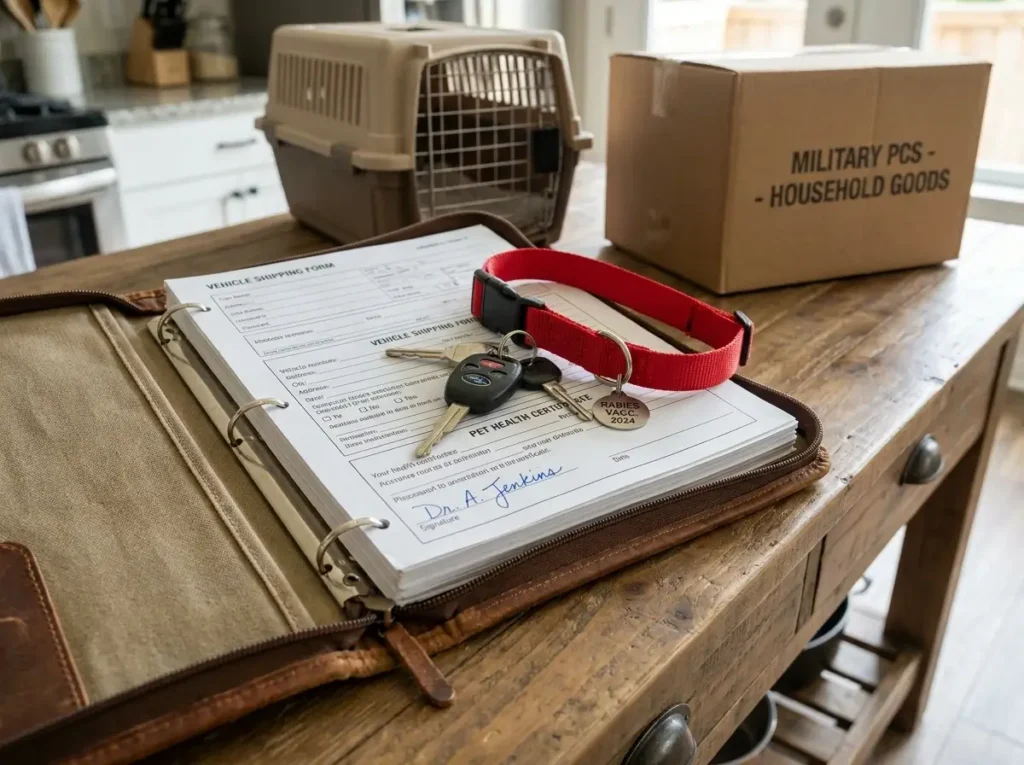
Moving your family is complicated enough, but adding vehicles and family pets to the equation introduces entirely new layers of logistical hurdles.
Because both cars and animals are heavily regulated across state and international borders, having flawless paperwork is absolutely non-negotiable. When you are finalizing what to put in a PCS binder, creating dedicated sections for your vehicles and pets will save you massive headaches on the road and at the airport.
Managing Your Vehicle Titles and Shipping Paperwork
Whether you are convoying across the country or shipping a car overseas, your vehicle documentation must be perfect.
If you are driving, ensure you pack the original vehicle titles—or official letters of permission from your lienholder—and up-to-date registration cards. Many families find out too late that their destination state requires original title documents, rather than simple photocopies, to legally register a vehicle and obtain new license plates.
If you are completing an Outside the Continental United States (OCONUS) move, you will likely be shipping a car through a government Vehicle Processing Center (VPC).
The VPC drop-off and inspection process is notoriously strict. You will need to hand-carry the VPC drop-off forms, pick-up forms, and specific military vehicle shipping documents to eventually clear customs.
A common mistake during overseas moves is accidentally locking the VPC drop-off receipt inside the shipped car itself. Always add these military shipping documents to the master list of what to put in a PCS binder so you can successfully claim your vehicle at the destination port without extensive delays.
Navigating Pet Travel and Health Clearances
Transporting pets requires some of the most time-sensitive paperwork of your entire relocation.
Every state, commercial airline, and foreign country has strictly enforced rules regarding animal entry. At a bare minimum, you must carry original rabies vaccination records, typically signed in blue ink by a military or USDA-accredited veterinarian.
If your family is flying, include any airline-specific health clearances. If you are moving overseas, you must carry the country-specific PCS pet health certificate required by your gaining installation.
These international health clearances are often only valid for a strict, short timeframe—usually 1 to 3 months—making them a highly stressful, last-minute addition to your paperwork files.
Finally, do not forget to pack physical printouts of your pet’s microchip information. Include the microchip ID number, the registry company’s name, and their emergency contact phone number.
During the chaos of a cross-country drive or a bustling airport layover, pets can easily slip out of a cracked door or a damaged carrier. If a lost pet is scanned by a local shelter, having the physical microchip printout in your binder allows you to immediately verify ownership and quickly update the registry with your temporary travel contact information.
By organizing these clearance documents carefully, you complete the puzzle of exactly what to put in a PCS binder to guarantee a safe, fully compliant journey for your four-legged family members.
Moving Company (TSP) and Inventory Paperwork

Handing over everything you own to a commercial moving company requires a massive amount of trust. To protect your household goods, your paperwork game needs to be absolutely flawless.
When determining exactly what to put in a PCS binder, moving company documents and inventory logs are your best defense against lost or damaged items. If you cannot prove what you owned or what condition it was in before the movers arrived, filing a successful claim later becomes incredibly difficult.
Managing Your TSP Contacts and Bill of Lading
Before the truck even arrives, you need to have your moving company’s details strictly organized. If you are wondering when to actually set all of this up, check out our guide on The Ultimate 90-Day PCS Move Timeline Checklist for Military Families for a complete breakdown of when to schedule your Transportation Service Provider (TSP).
Once your move is scheduled, dedicate a specific tab in your binder to your TSP contacts. This should include the direct phone numbers and email addresses for your assigned moving coordinator, the local origin agency, and the destination agency.
On packing day, make sure to ask for the truck driver’s full name and direct cell phone number before they drive away.
Most importantly, you must hand-carry your copy of the bill of lading. This is the legal contract between you, the military, and the moving company. It dictates the estimated weight of your shipment, the required delivery dates, and the destination address.
The bill of lading is arguably one of the most critical documents to remember when finalizing what to put in a PCS binder, as you will need to reference it constantly when coordinating the final delivery window.
The High-Value Inventory Sheet
During the packing process, the movers are required to fill out a specialized military document for expensive items. This high-value inventory sheet is designed to specifically track belongings like gaming consoles, designer goods, expensive electronics, and collectibles.
A common mistake is allowing the movers to accidentally pack this sheet into a moving box, or forgetting to have the lead driver sign it before departing.
You must verify that every expensive item is accurately listed with its corresponding box number. Review it carefully, sign the document yourself, and ensure the driver signs it as well.
Once signed, place that physical copy directly into your hand-carried files. If a high-value item goes missing during transit, this single piece of paper is your primary leverage for a fast, successful replacement claim.
Your Personal Home Inventory
While the moving company will create their own numbered inventory list using stickers and a digital tablet or clipboard, you must also maintain your own internal records. Relying solely on the mover’s paperwork is a massive financial risk.
To truly complete the list of what to put in a PCS binder, include a physical flash drive or a printed log of your own personal home inventory.
This personal inventory should include:
- Condition photos and videos: Clear visuals of expensive furniture, proving it was in excellent condition before the movers wrapped it in blankets.
- Electronics logs: A printed spreadsheet listing the make, model, and serial numbers of all televisions, computers, and gaming systems.
- Appraisals and receipts: Printed copies of professional appraisals for antiques, or high-dollar purchase receipts for recently bought furniture.
Having this concrete evidence securely stored in your binder makes the military claims process significantly easier. If you have to report damaged or missing household goods at your new duty station, you will have the exact proof required to get fully reimbursed without a fight.
How to Customize What to Put in a PCS Binder for OCONUS Moves
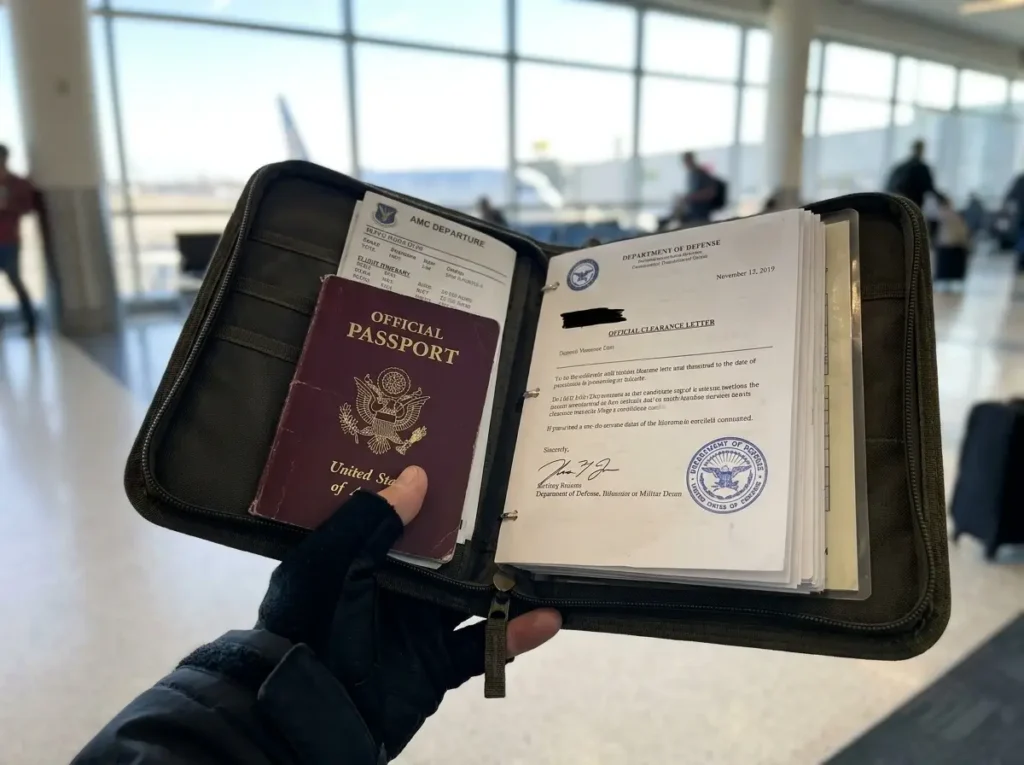
Moving Outside the Continental United States (OCONUS) completely rewrites the standard relocation rulebook. You are no longer just crossing state lines; you are navigating international customs, foreign immigration laws, and military flight terminals.
Because the logistical stakes are so much higher, knowing exactly what to put in a PCS binder for an overseas move requires a specialized approach. You need to add several highly specific international travel documents to your master checklist to ensure your family can legally enter and live in your new host country.
Command Sponsorship and Family Clearances
If your family is joining you overseas, the Command Sponsorship letter is arguably the single most important piece of paper you will carry.
This official document proves that the military has formally authorized your dependents to live in the host country at the government’s expense. Without a physical Command Sponsorship letter in hand, your family members will face massive roadblocks upon arrival.
Specifically, this letter is strictly required to unlock:
- Base housing assignments or overseas housing allowances (OHA)
- Enrollment for your children in Department of Defense Education Activity (DoDEA) schools
- Access to TRICARE Overseas medical coverage at the base clinic
A common mistake is assuming that simply having your dependents listed on your original PCS orders is enough to clear international customs and secure housing. It is not. You must hand-carry the official Command Sponsorship memo in your binder, keeping it easily accessible for the gaining base’s administrative offices.
No-Fee Passports and SOFA Stamps
International military travel requires specialized identification beyond your standard blue tourist passport. When organizing what to put in a PCS binder for an OCONUS move, you must prioritize your family’s No-Fee Passports.
These government-issued passports—often distinct from civilian passports in their cover color [VERIFY: confirm current cover color for dependent No-Fee passports, typically maroon]—indicate that you are traveling abroad on official military orders rather than for a personal vacation.
Just as importantly, these passports must contain a Status of Forces Agreement (SOFA) stamp, or you must carry an accompanying SOFA certificate. This stamp is the legal treaty agreement that allows your family to reside in the host nation without a traditional civilian immigration visa.
If you land in Germany, Japan, or South Korea without a valid No-Fee passport and SOFA stamp, your family could legally be treated as tourists. This means they would be subject to strict civilian visa time limits, which can cause significant legal and financial headaches for your command.
Port Call Assignments and Patriot Express Travel
Unlike stateside moves where you simply pack up your car and drive, an OCONUS relocation usually involves a very specific military flight schedule.
You will receive a port call assignment, which dictates exactly when and where you must report for your overseas departure. Most military families fly on the Patriot Express, a commercially chartered flight exclusively for military passengers, often departing from specific Air Mobility Command (AMC) terminals like Baltimore-Washington International (BWI) or Seattle-Tacoma (SEA).
Your binder needs a dedicated section specifically for these travel documents. Make sure to include printed copies of your Patriot Express flight itineraries, your official port call assignment paperwork, and any temporary lodging (TLE/TLA) reservations near the passenger terminal.
Commercial and military flight systems frequently experience digital glitches. Having physical copies of your military flight itinerary ensures you will not be turned away at the terminal counter due to a computer error.
By keeping these specialized international records perfectly organized, you take the guesswork out of what to put in a PCS binder and guarantee a smooth entry into your new overseas community.
Conclusion
A successful relocation relies heavily on what you keep within arm’s reach.
By knowing exactly what to put in a PCS binder, you create a safety net for yourself, your family, and your finances.
Take the time to gather these documents before the packing materials arrive at your house.
Ready to get your paperwork sorted? Grab your folders, start printing your orders, and use this checklist to secure your peace of mind for your upcoming move.