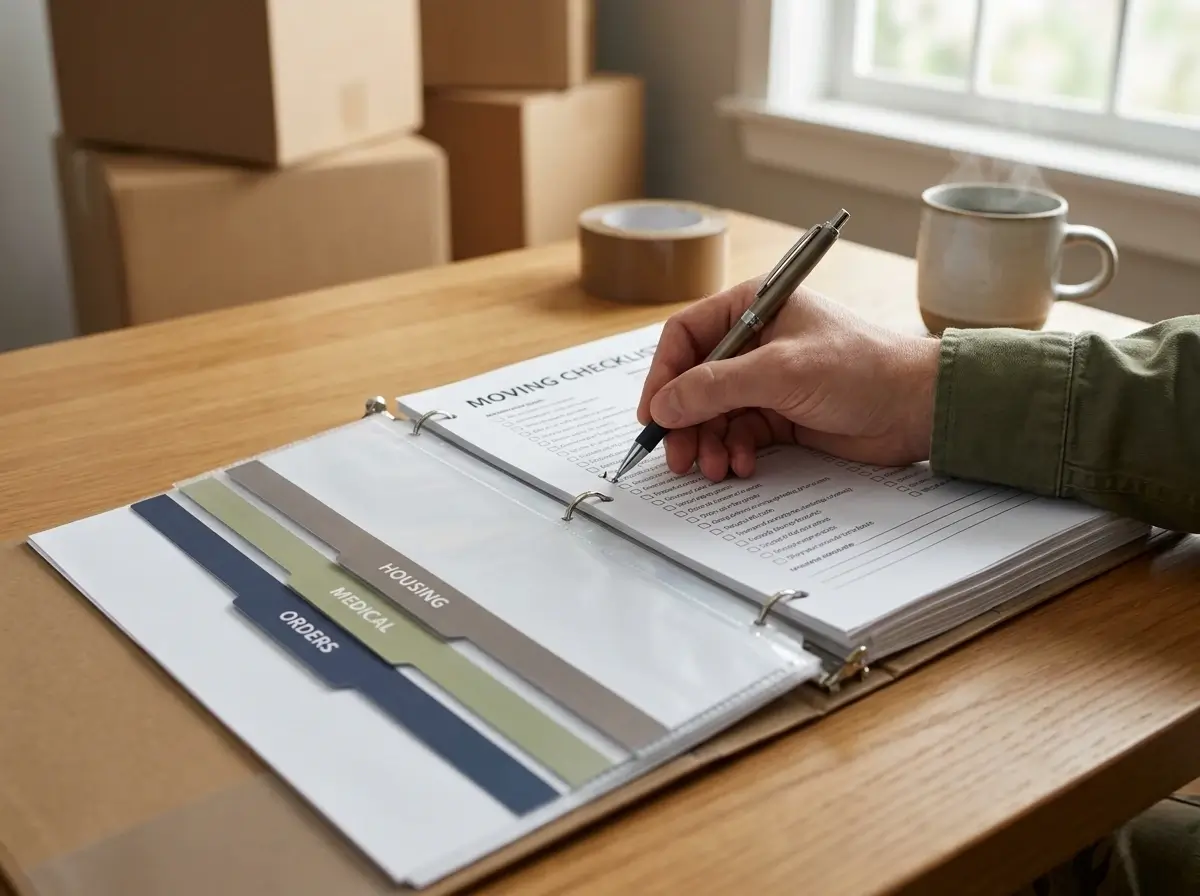
A military move is a logistical mountain, and the biggest avalanche hazard is missing documents.
One misplaced form can delay your housing, disrupt a paycheck, or stall school enrollment for weeks. It happens every day. You don’t just need files—you need the right files, easily accessible, before the movers even touch a single box.
That is exactly why you need a reliable PCS paperwork checklist.
We built this guide to cut through the confusion. Keep reading to secure every essential document and take control of your transition.
Why You Need a Dedicated PCS Paperwork Checklist

Every military family knows the familiar chaos of a Permanent Change of Station (PCS).
Between clearing housing, scheduling packers, and planning the travel route, the details can easily become overwhelming. But amidst the sea of moving boxes, your most valuable cargo isn’t your furniture—it’s your documentation.
Relying on memory to gather every birth certificate, medical file, and vehicle registration is a recipe for disaster. This is exactly why building a comprehensive PCS paperwork checklist is the most important step in your moving timeline.
Let’s break down exactly why this single organizational tool can make or break your relocation.
The Golden Rule of Military Moving
There is one non-negotiable rule when it comes to military relocations: Crucial documents should never, under any circumstances, go into the moving truck.
It is a common mistake for families to leave important files on a desk, only for the packers to swiftly box them up on moving day. Once those documents are loaded into an 18-wheeler, you lose access to them for weeks, or potentially months.
Household goods shipments frequently face delays, and in some cases, boxes go missing entirely. If your orders, passports, or social security cards are sitting in a warehouse halfway across the country, you cannot enroll your children in school or secure your new home.
Keeping these files strictly in your personal vehicle or carry-on bag is the only way to guarantee they arrive when you do.
Stop the Last-Minute Scramble
Moving fatigue is very real, and the final weeks before a PCS are always the most stressful. Without a master list, you are guaranteed to be tearing through filing cabinets at midnight before you drive away.
Having a consolidated PCS paperwork checklist prevents this panicked, last-minute scramble.
Instead of relying on mental notes, you can methodically track down and check off each required document weeks in advance.
Consider tackling the collection process in phases:
- Month 1: Gather hard-to-replace vital records (birth certificates, marriage licenses, dependent IDs).
- Month 2: Print medical, dental, and school records.
- Moving Week: Print multiple copies of your official orders and last-minute travel reservations.
This structured approach protects your peace of mind and keeps the entire family organized.
Expedite Your Arrival and In-Processing
The exhaustion doesn’t end when you finally drive through the gates of your new installation. Arriving is just the beginning of a lengthy administrative process.
However, arriving at your new base with complete, organized paperwork drastically expedites your check-in process.
Here is how having your documents ready directly benefits you:
- Housing assignments: The base housing office needs physical copies of your orders and dependent information before you can even join the waitlist.
- Finance processing: Filing your travel vouchers and getting reimbursed for a Personally Procured Move (PPM) requires weight tickets, receipts, and specific military travel claims forms.
- Medical and school enrollment: Base clinics and local schools require hard copies of shot records and physicals before you can schedule appointments, start classes, or update your TRICARE region.
If you are missing a single signature or form, you will be sent to the back of the line.
By strictly following a PCS paperwork checklist, you eliminate administrative delays, ensuring you get paid faster and settled into your new home sooner.
The Core Military PCS Paperwork Checklist: Official Orders & IDs
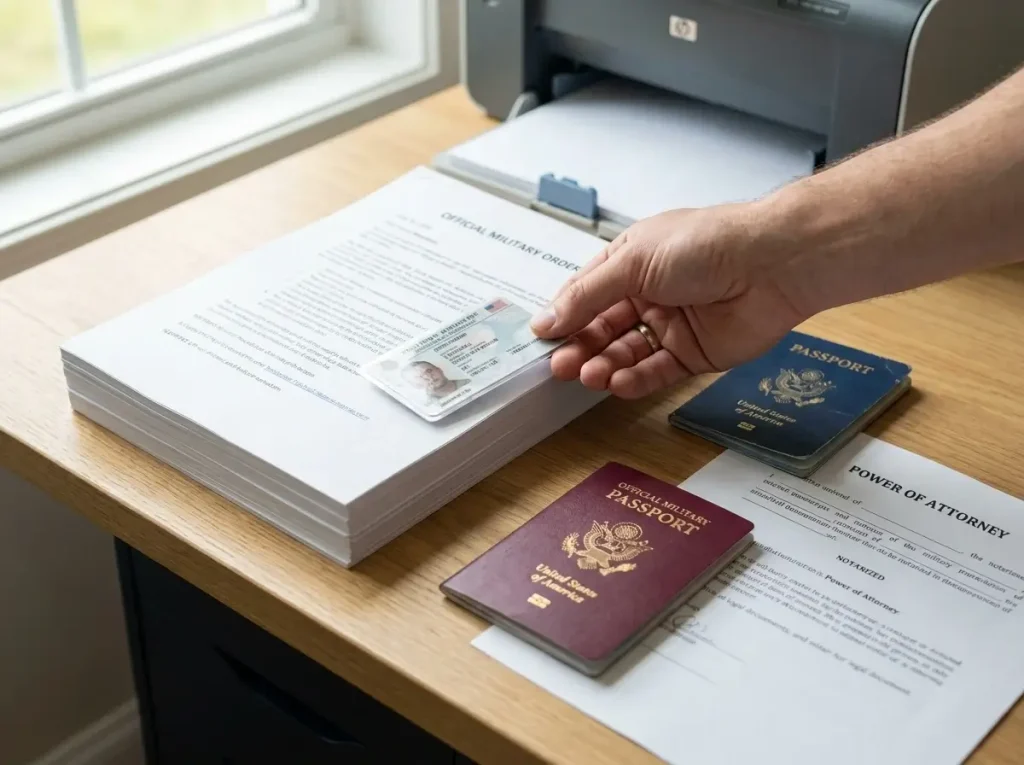
When you begin assembling your PCS paperwork checklist, the very first items you must secure are your core identity and authorization documents.
Without these fundamental files, your move will come to a complete standstill. You cannot check into a temporary lodging facility on base, cross an international border, or get reimbursed without proving exactly who you are and where the military has instructed you to go.
Mastering Your PCS Orders
Your official PCS orders are the lifeblood of your entire relocation.
A common mistake many families make is relying entirely on digital copies saved to a smartphone. Phone batteries die during long road trips, and cell service at new military installations can be notoriously unreliable.
Always print multiple physical copies of your orders. You will hand these out constantly to housing offices, transportation providers, and finance clerks. Be sure to print 15 copies to keep in your primary moving binder.
When making these copies, make sure to print the front and back of every page. Base agencies require complete sets to process your transition paperwork.
Critically, if your orders change prior to moving, you must print every single official amendment. Your PCS paperwork checklist is not considered complete until those amendments are physically attached to the original orders.
Essential Identification and Passports
Next, verify every form of physical identification for your household members well before your departure date.
Ensure the sponsor’s military ID and all dependent IDs are up to date and will not expire during the transition window. Check every driver’s license in your family—arriving in a new state with an expired license severely complicates vehicle registration and base access.
If you are executing an OCONUS (Outside the Continental United States) relocation, your documentation requirements become significantly more complex.
You must prepare the following travel documents for overseas moves:
- Official (No-Fee) Passports: Required for the sponsor and dependents to legally enter the host country under military orders.
- Tourist Passports: Necessary for any leisure travel across borders once you arrive at your overseas duty station.
- Visas and SOFA Stamps: Essential Status of Forces Agreement (SOFA) stamps that prove your legal right to reside in the host nation.
Never pack these items in your checked luggage during a flight. They must remain on your person at all times.
Why You Need a Power of Attorney (POA)
Military life is notoriously unpredictable. Sponsors are frequently required to deploy, attend temporary duty training (TDY), or travel separately from their families during a major move.
This is why a Power of Attorney (POA) is a non-negotiable addition to your PCS paperwork checklist.
Without a valid, unexpired POA, a spouse cannot legally accept a household goods (HHG) delivery from the moving company. They also cannot sign a lease for base housing, enroll children in a new school district, or register a vehicle in the sponsor’s name.
Many seasoned military spouses find that carrying a mix of POAs offers the best legal protection. A general POA covers broad situations, but specific POAs—such as one drafted explicitly for real estate transactions or accepting vehicle shipments—are often preferred by finance and housing offices.
Visit your local base legal office (JAG) to have these documents drafted and notarized for free well before you begin clearing your current duty station.
Your PCS Paperwork Checklist for Household Goods (HHG) & Housing
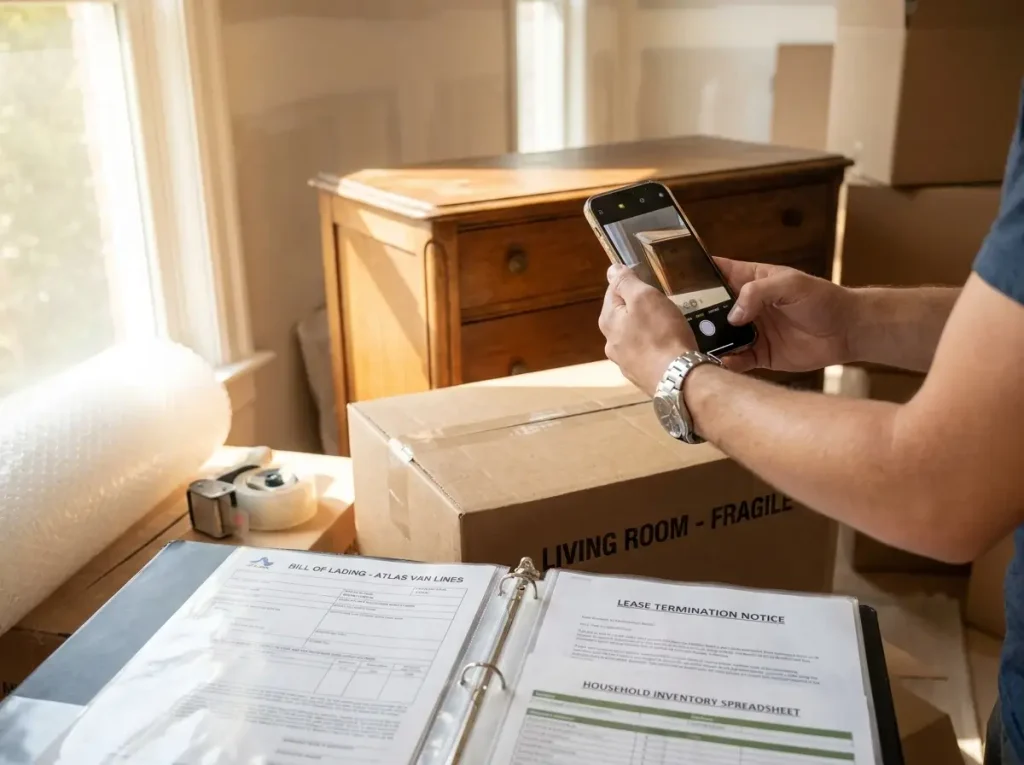
Once the official orders and IDs are secured, your focus must shift to the physical logistics of your move.
Coordinating the pack-out of your household goods (HHG) and managing two separate residences simultaneously is a massive undertaking. A lost bill of lading or a missing lease agreement can lead to denied damage claims or severe financial penalties.
By dedicating a section of your PCS paperwork checklist strictly to moving and housing documents, you maintain total control over your property. Let’s look at the essential files you need to track during the transition between homes.
Managing Your Moving Company Documents
During a military move, you will communicate with a dizzying array of contractors, packers, and dispatchers. Keeping your moving company documents organized is the only way to hold your Transportation Service Provider (TSP) accountable.
Always keep a physical copy of your TSP’s direct contact information and dispatch numbers readily available. If the moving truck does not arrive on schedule, you do not want to be searching through a cluttered email inbox for a customer service phone number.
You must also retain physical copies of your pre-move survey results and your official Bill of Lading.
The Bill of Lading is essentially the master receipt for everything you own, containing your shipment’s tracking numbers and estimated delivery dates. Treat this document with the utmost importance until your household goods are safely unpacked at your destination.
Protecting Your Inventory and Valuables
No one wants to anticipate damaged furniture or missing boxes, but it is an unfortunate reality of many military relocations. To protect your property, your PCS paperwork checklist must include comprehensive proof of ownership and condition.
Create a personal high-value item inventory listing electronics, jewelry, antiques, and expensive professional gear. Include the serial numbers, purchase dates, and estimated replacement costs for each individual item.
Crucially, you need visual proof of your belongings’ condition prior to pack-out:
- Take clear, timestamped photos of your furniture, noting the lack of existing scratches or dents.
- Record a continuous video walkthrough of your home showing electronics in working order.
- Print out the most critical photographic documentation to keep with your moving files.
If you need to file military damage claim forms later, this physical and visual evidence is often the difference between a swift reimbursement and a denied claim.
Clearing Current Housing and the SCRA
Legally closing out your current residence requires specific paperwork, whether you currently rent or own.
For renters, include a physical copy of your lease termination letter in your files. A common mistake many renters make is failing to formally invoke the Servicemembers Civil Relief Act (SCRA) in writing when breaking a lease due to military orders. Having a copy of your SCRA notification letter and the landlord’s written acknowledgement prevents future disputes over security deposits.
If you own the home you are leaving, ensure your mortgage documents, property management contracts, or real estate selling agreements are easily accessible. You will likely need to reference these files while in transit, especially if you are managing a closing or a rental property remotely.
Securing Your Future Housing
Finally, ensure your PCS paperwork checklist includes every document related to the home you are moving into.
If you are moving into base housing, print your housing applications, waitlist confirmations, and the gaining installation’s welcome packet. Having these physical files ready prevents administrative delays when you arrive at the housing office to receive your keys.
If you are renting on the local economy, bring your private rental agreements, proof of renters insurance, and receipts for any security deposits already paid. Having these documents organized ensures that the moment you arrive at your new duty station, you are ready to unpack and settle in.
Medical and Dental Records to Include on Your PCS Paperwork Checklist
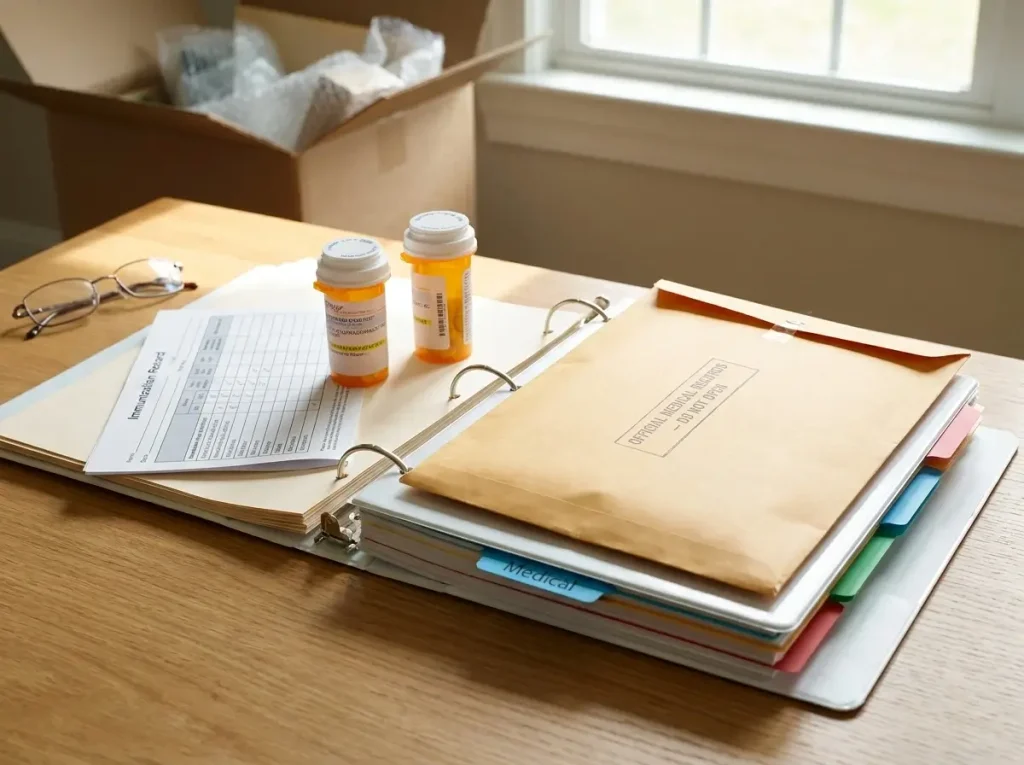
When you transition between duty stations, your family’s healthcare coverage officially transfers with you.
However, the administrative side of that transfer is rarely seamless. Adding complete medical and dental files to your PCS paperwork checklist is the only way to guarantee a smooth transition of care.
Without these documents safely in your hands, you risk delayed appointments, lapsed medications, and massive headaches at the new base clinic. Let’s look at exactly what health records you need to physically carry.
Why You Need Hard Copies of Medical Records
A common mistake many families make is assuming the military’s digital health systems will instantly update.
Do not rely entirely on digital TRICARE portals when crossing state lines or international borders. System lags frequently occur during transfers, leaving your new medical providers without any patient history for weeks.
Always request physical, hard copies of your medical and military dental records before clearing your current installation. Note that depending on the clinic, these records may be handed to you in a sealed envelope or loaded onto a secure CD.
If the clinic provides a sealed envelope, do not open it, as tampering can sometimes invalidate the official records. Keep these files securely organized alongside your PCS paperwork checklist while traveling.
Securing Immunizations and Prescriptions
Getting settled quickly usually means getting your children back into their normal daily routines.
Unfortunately, local schools, daycares, and on-base youth centers will absolutely not let your child through the door without proof of vaccination. You cannot wait for the local clinic to process your files before enrolling them.
Include these critical health items in your travel binder:
- Immunizations: Up-to-date, official shot records for all dependents.
- Current Prescriptions: Hard copies of any ongoing prescriptions, allowing you to get an emergency refill at a civilian pharmacy if TRICARE regional changes are delayed.
- Specialist Referrals: Printed referrals from your outgoing doctor to expedite getting new authorizations at your next duty station.
It is highly recommended to request a 30 days supply of essential medications before leaving, using the hard copy prescriptions purely as a travel backup.
Managing EFMP Documentation
If your family is enrolled in the Exceptional Family Member Program (EFMP), your PCS paperwork checklist carries even more weight.
Continuity of care is absolutely vital for dependents with specialized medical or educational needs. Ensure you have every single piece of EFMP documentation printed and carefully sorted before the moving trucks arrive.
This includes recent diagnostic reports, ongoing therapy treatment plans, and updated care provider notes. Many EFMP families find that hand-delivering these comprehensive files directly to the gaining base clinic drastically cuts down the time it takes to establish a new care team.
By treating these health records as your most critical cargo, you protect your family’s well-being through every phase of the relocation process.
Essential Financial and Legal Documents for Military Families
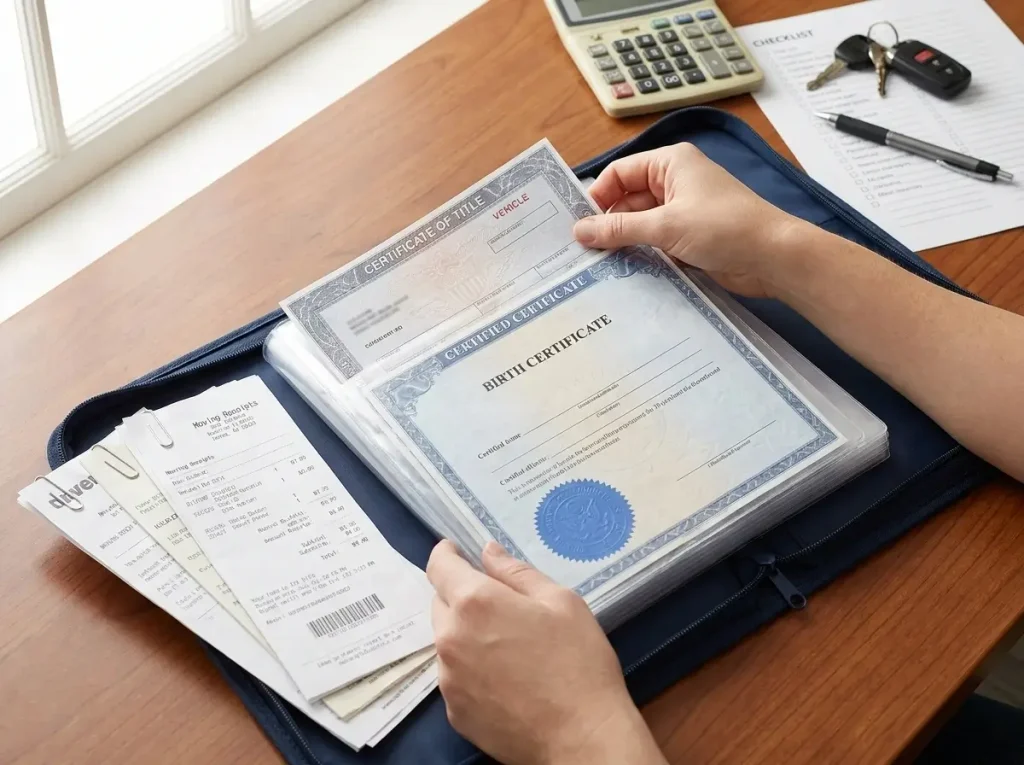
A military move involves massive financial shifts and legal transitions.
Failing to properly manage your family’s personal documents can lead to identity theft, severe delays in travel pay reimbursement, or legal issues in your new state. Securing your core financial and civil records on your PCS paperwork checklist guarantees that you can quickly handle banking, vehicle registration, and travel claims upon arrival.
Let’s look at the legal and financial paperwork you must carry by hand.
Securing Vital Civil and Legal Records
Your family’s vital records are nearly impossible to replace on short notice during a cross-country or overseas move.
A common mistake is placing original birth certificates or social security cards in a fireproof safe and allowing the movers to load it onto the truck. If that safe is delayed or lost, you cannot update DEERS, obtain new dependent IDs, or establish local bank accounts.
Add the following original or certified legal documents to your binder:
- Birth & Adoption Records: Certified birth certificates for every family member and official adoption decrees.
- Marriage & Family Documents: Certified marriage licenses, divorce decrees, or legal custody agreements.
- Social Security Cards: Original social security cards for the sponsor, spouse, and all children.
Keeping these foundational files strictly on your PCS paperwork checklist ensures you have the documentation necessary for every official appointment at your new base.
Managing Vehicle Titles, Registration, and Shipping
Moving to a new state or country often requires re-titling and registering your privately owned vehicles (POVs).
Make sure you have current proof of auto insurance and vehicle registrations readily available in your vehicle or carry-on bag. If your vehicle is paid off, carry the original vehicle title. If you are still financing the car, you may need a formal letter of permission from your lender allowing you to register the vehicle in a new state or ship it overseas.
For families completing an OCONUS move that involves vehicle shipping, documentation requirements are even stricter.
You must carry your official Vehicle Processing Center (VPC) shipping paperwork, vehicle inspection forms, and clean title documentation. Missing a single signature on your VPC forms can prevent your car from being loaded onto the cargo ship, leaving you without transportation for months.
Organizing Finance Records, Receipts, and Travel Claims
A PCS move is an expensive undertaking, and getting reimbursed quickly is essential for maintaining your family’s budget.
Once you arrive at your new duty station, you will need to file military travel claims (often processed through systems like SmartVoucher or your branch equivalent) to settle your travel vouchers and claim per diem or dislocation allowances (DLA).
Keep these crucial financial records easily accessible:
- Tax & Banking Information: Recent tax returns and bank routing/account numbers to verify direct deposit information with the base finance office.
- PPM/DITY Move Receipts: Legible, organized receipts for gas, tolls, packing materials, and temporary lodging expenses.
- Certified Weight Tickets: If performing a Personally Procured Move (PPM), you must carry certified full and empty weight tickets from a certified public scale.
Without those certified weight tickets, the military finance office cannot calculate your incentive pay, which can delay thousands of dollars in reimbursements.
By tracking these critical files with a reliable PCS paperwork checklist, you protect your finances and ensure a smooth transition into your new assignment.
Securing School and Pet Records
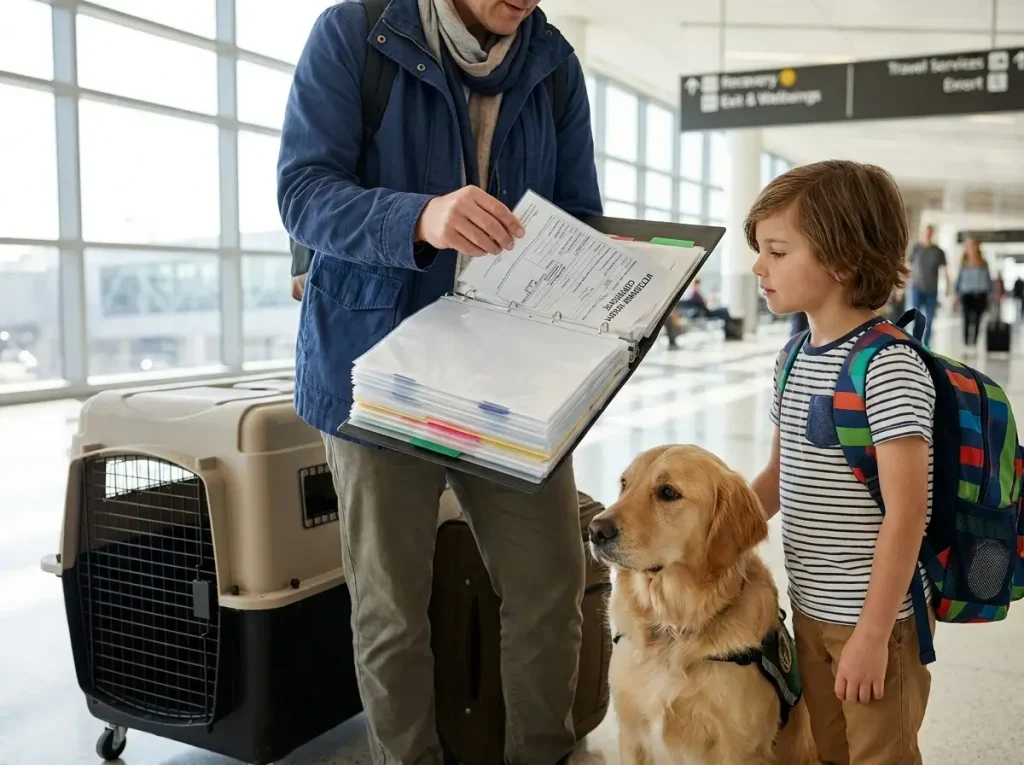
Moving your household goods is simple compared to moving the most vulnerable members of your family: your children and your pets.
Seamlessly transferring a student to a new school district or flying a family dog across the globe requires precise, uncompromising documentation. If you leave these files behind, your child could face delayed grade placement, and your pet could be flatly denied boarding at the airline terminal.
Adding these specific, time-sensitive files to your PCS paperwork checklist is the only way to ensure the whole family stays together and remains on track.
Managing Education and School Transfers
When it comes to education, local school districts have strict enrollment requirements.
A common mistake many parents make is assuming the old school will automatically and quickly forward all academic records to the new one. While official transcripts are eventually sent school-to-school, this administrative process can take weeks, leaving your child in academic limbo.
To prevent this delay, explicitly request unofficial school transcripts and official dependent school withdrawal forms during your final week at the current installation. Hand-carrying these documents allows the receiving school to immediately place your child in the correct grade and the appropriate elective classes.
If your child requires special education services, you must physically carry:
- Individualized Education Programs (IEPs): The most recent, fully signed copy of your child’s IEP and all progress reports.
- 504 Plans: Complete documentation outlining any required classroom or testing accommodations.
- Evaluations: Any recent psychological, speech, or educational evaluations that support the school IEP transfer.
Keeping these documents securely on your PCS paperwork checklist legally ensures that your child’s new school implements their mandated accommodations from day one, rather than making them wait for a brand new evaluation process to finish.
Navigating Pet Transport and Quarantine
Military pet transport is highly regulated, and the airline paperwork requirements leave absolutely zero room for error.
Commercial airlines, military passenger terminals, and international customs agents will meticulously check your pet’s travel documents before allowing them into the cargo hold or cabin. Your PCS paperwork checklist must include all original veterinary records, but you must pay exceptionally close attention to the timing.
You must secure an official veterinary health certificate issued typically within 10 days of travel. If your flight is delayed and this specific certificate expires, you will have to scramble to find a local vet for a new exam before you are allowed to fly.
Include these essential pet documents in your travel binder:
- Health Certificates: An original, signed health certificate from a USDA-accredited or military veterinarian.
- Rabies Vaccination Records: Proof of current rabies vaccination, often requiring a physical signature in blue ink for international customs.
- Overseas Quarantine Documents: Specific import permits, FAVN rabies titer test results, and quarantine facility reservations for OCONUS moves.
Failing to present complete overseas quarantine documents upon arrival can result in your pet being seized or subjected to a lengthy quarantine at your own personal expense. Treat your pet’s travel documents with the exact same level of security and care as your own official passports.
What to Do With Your Checklist (Hint: Don’t Just Leave It Loose)

You have spent weeks tracking down every birth certificate, medical file, and signed lease. Your PCS paperwork checklist is finally fully checked off.
However, knowing exactly what documents to gather is only half the battle. The true test of a successful military relocation is how securely you manage those physical files once they are printed and gathered.
The Danger of Loose Paperwork
If you simply stack these critical documents in a manila folder or toss them haphazardly into a travel backpack, you are inviting an administrative disaster.
A common mistake during long-distance moves is underestimating the chaotic reality of road trips, multiple hotel stays, and airport security lines. Loose papers slide under car seats, coffee spills happen in crowded temporary lodging facilities, and unorganized folders easily get mixed up with children’s travel entertainment.
When you arrive at the base housing office, the finance desk, or the local school district, you do not want to be frantically digging through a messy pile of crumpled papers.
You need a reliable filing system that physically protects your files and allows you to instantly retrieve exactly what the clerk is asking for. A perfectly executed PCS paperwork checklist is completely useless if the actual papers are damaged, stained, or lost in transit.
Build a Dedicated Moving Binder System
The absolute best way to manage and protect your completed PCS paperwork checklist is to secure everything within a dedicated, heavy-duty moving binder.
A physical binder transforms a chaotic, vulnerable stack of loose forms into a durable, portable filing cabinet. Using clear, waterproof sheet protectors and reinforced tab dividers ensures that every single document—from your sponsor’s official orders to your pet’s health certificate—is protected from weather, accidental spills, and the general wear-and-tear of constant travel.
It also allows you to quickly flip to the exact section you need while standing in line to file your PCS travel vouchers.
If you are ready to take your collected documents and turn them into a secure, organized system, you need to build the right physical structure. Be sure to review our comprehensive guide on How to Build a PCS Move Planning Binder You’ll Actually Use for step-by-step physical assembly instructions and supply recommendations.
Once your binder is physically built, you can cross-reference your files against The Complete Master Checklist of What to Put in a PCS Binder to ensure every tab is correctly categorized and perfectly staged for your departure.
Maintain Strict Physical Custody
Once your documents are secured within your new binder system, the final and most critical step is maintaining strict physical custody throughout the journey.
Your binder must be treated like a piece of high-value carry-on luggage. If you are flying to an overseas assignment, it goes under the seat in front of you—never in the checked baggage hold. If you are driving across the country, it belongs in the front passenger compartment or securely tucked into your primary overnight bag.
Never pack it away in a rooftop cargo box or bury it at the bottom of a packed trunk. By actively protecting the files you worked so hard to collect, you guarantee a smooth, organized, and stress-free arrival at your next duty station.
Conclusion
Gathering these records takes time.
But the peace of mind you get at your new duty station is worth every minute spent copying and filing. Don’t let a missing birth certificate or a lost medical file derail your family’s fresh start.
Print this checklist, track down those documents, and keep them in your personal possession throughout transit.
Ready to put these documents into action? Check out our guide on building your physical PCS binder to keep these papers perfectly organized.