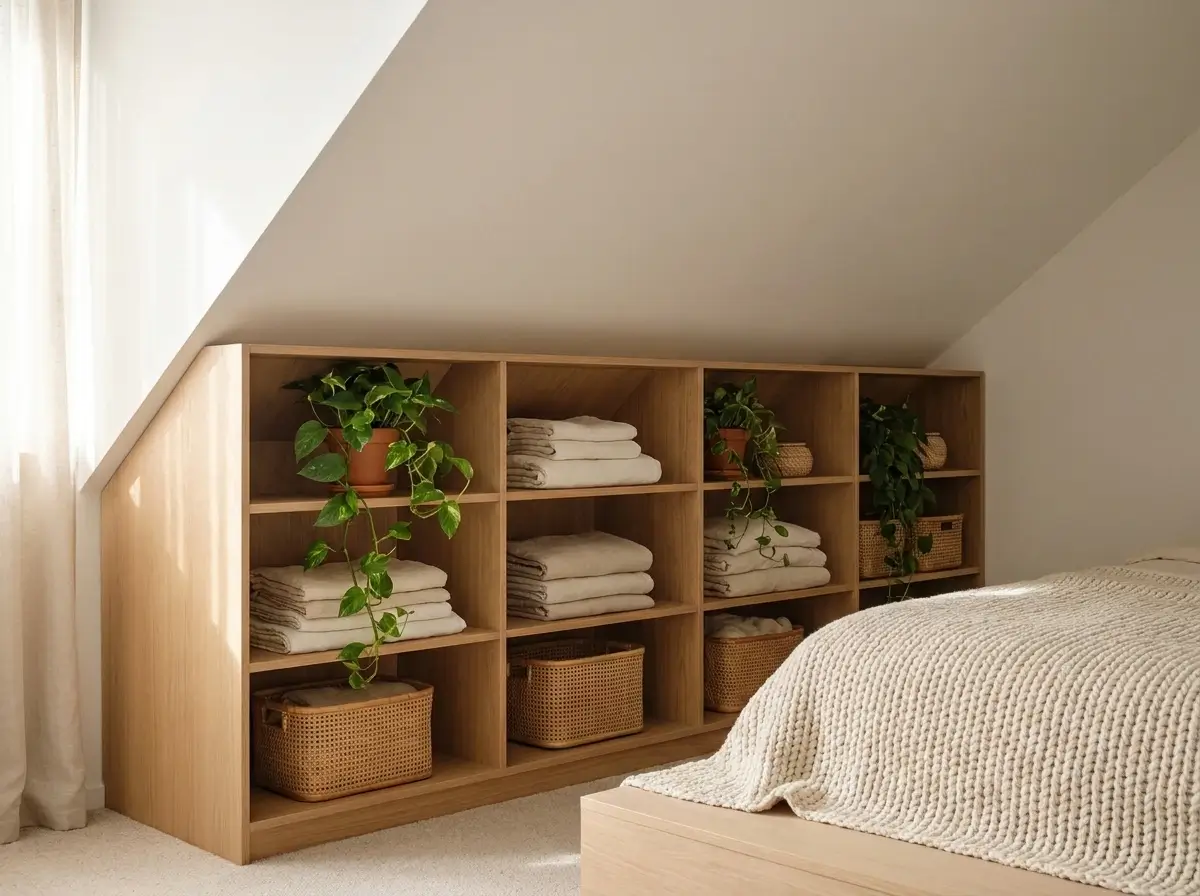
Awkward sloped walls can easily make you feel like you are living inside a cramped tent rather than a comfortable home.
For renters, this architectural quirk creates a major organizing dilemma. You need functional storage, but you cannot permanently alter the walls or build custom cabinetry to fit the angles.
When you rent a space with small attic bedroom sloping ceilings, figuring out where to put your everyday belongings becomes a daily puzzle. Standard tall bookshelves simply will not fit against the walls, and the usable floor space vanishes quickly.
Fortunately, maximizing these tricky triangular zones does not require power tools or a sacrificed security deposit.
In this guide, we will cover flexible freestanding storage, creative tension rod hacks, and modular furniture layouts that help you reclaim your space and make your room feel surprisingly expansive.
Why Small Attic Bedroom Sloping Ceilings Challenge Renters
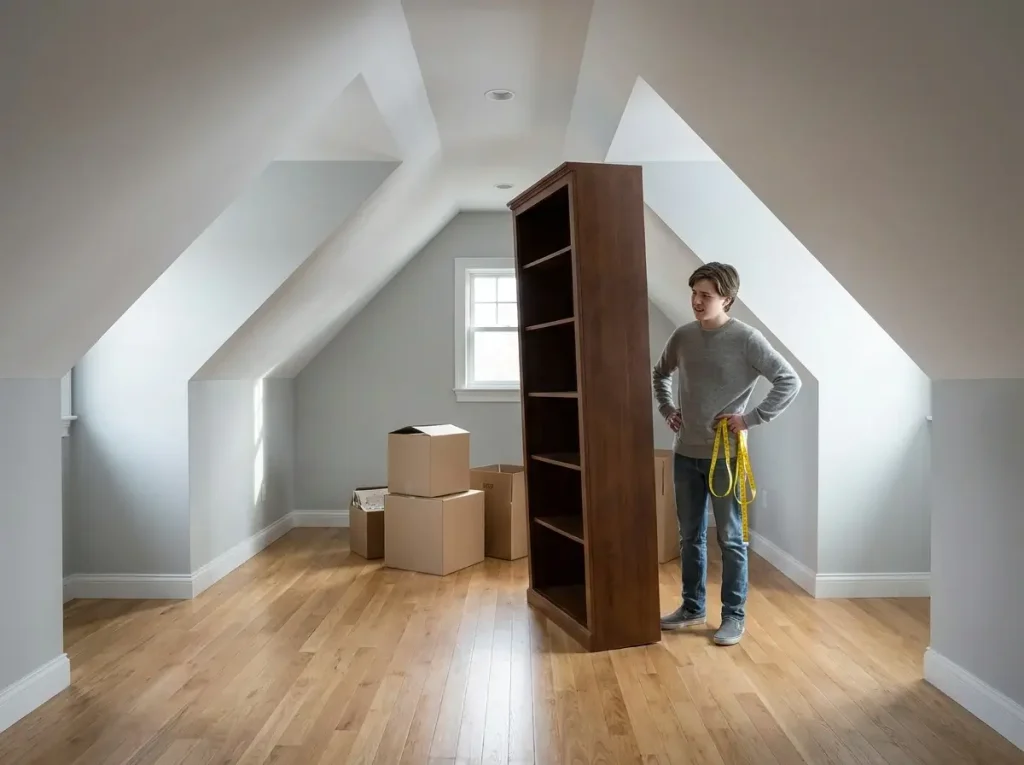
If you have ever tried to push a standard bookcase against an angled wall, you already know the frustration. When renting a home, small attic bedroom sloping ceilings present a unique set of obstacles. The primary challenge is the severe loss of standard vertical wall space.
In a typical room, you can push tall dressers, bulky wardrobes, or towering bookshelves right up against the drywall. Under a pitched roof, that predictable vertical real estate simply does not exist.
Instead, you are left with odd angles that seem to reject every piece of standard furniture you own. Understanding exactly why these spaces are so difficult to furnish is the first step toward reclaiming your lost square footage.
Identifying Your Dead Zones
The biggest culprit in a top-floor room is the “knee wall.” This is the short, vertical wall that stops where the pitched ceiling begins its upward slope. Knee walls often measure just two or three feet high from the floor.
Because you cannot stand fully upright near them, the floor space immediately in front of a knee wall often turns into a frustrating dead zone.
When dealing with small attic bedroom sloping ceilings, these dead zones accumulate quickly. Before you know it, all of your belongings are clustered awkwardly in the center of the room just so you can reach them without bumping your head.
To make matters more complicated, you need to understand broader space-planning concepts before zooming in on the sloped zones. Exploring foundational ways to maximize an overarching loft layout can help you establish a strong baseline before you start tackling those awkward, low-clearance knee walls.
The Renter’s Dilemma: Temporary vs. Permanent
Homeowners can solve these architectural quirks relatively easily. They hire contractors to build custom cabinets that slot perfectly under the eaves, or they install permanent, heavy-duty shelving directly into the angled ceiling joists.
As a renter, those permanent structural options are strictly off-limits.
Living with small attic bedroom sloping ceilings means navigating strict lease agreements. Property managers typically forbid major structural changes or extensive wall modifications.
This restriction creates a major hurdle when you desperately need more storage but cannot physically drill into the plaster.
Consider the common lease restrictions you might face regarding wall modifications:
- No heavy drilling: Anchoring custom built-ins or heavy closet rods into the studs is rarely permitted.
- No custom millwork: You cannot permanently attach wooden shelves, cubbies, or window benches to the structure of the house.
- Strict drywall repair clauses: Even minor damage from standard drywall anchors or large screws can result in hefty security deposit deductions.
Furthermore, if you are someone who moves frequently, investing in heavy, custom-fit furniture is highly impractical. You need storage solutions that slide effortlessly under your current angles but can still pack up easily for your next apartment.
The true challenge of small attic bedroom sloping ceilings is finding that perfect balance: maximizing your awkward dead zones without violating your lease or weighing down your next moving truck.
Best Freestanding Storage for Awkward Pitched Roofs
When you are dealing with small attic bedroom sloping ceilings, your standard approach to furniture shopping has to change completely. Since you cannot install permanent built-in cabinetry as a renter, freestanding storage becomes your best friend.
The trick is choosing pieces that work with the severe angles of your room rather than fighting against them.
Finding the right freestanding storage means letting go of tall, imposing furniture and embracing low, adaptable pieces that tuck neatly against your knee walls.
Stepped Modular Cubes
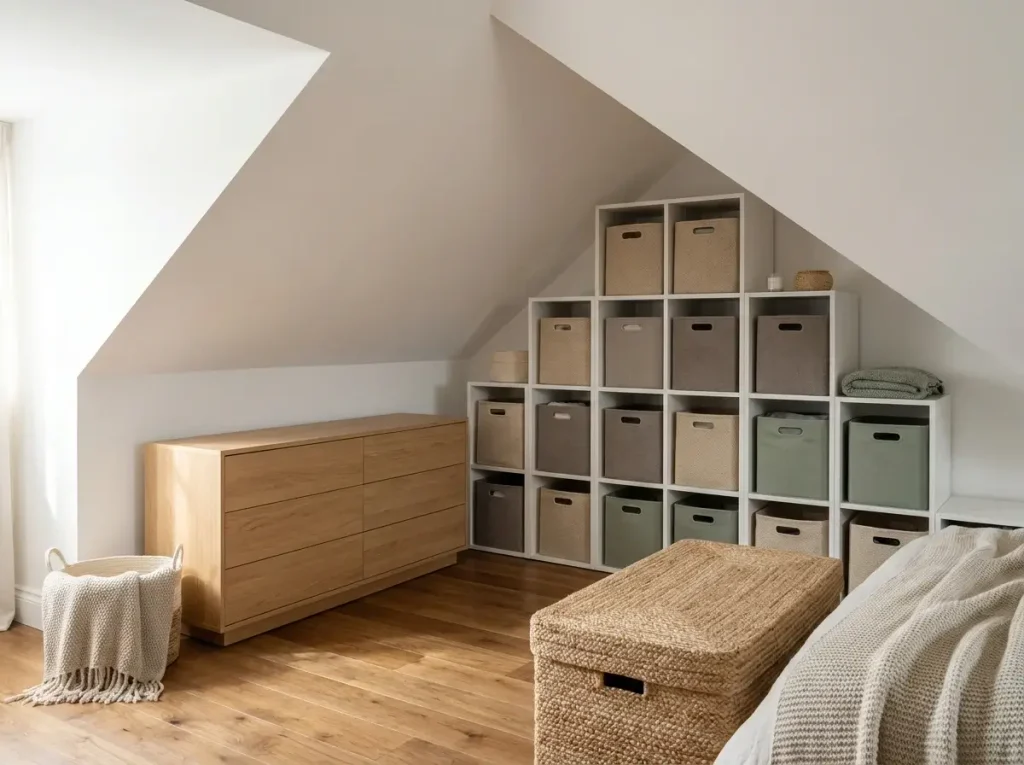
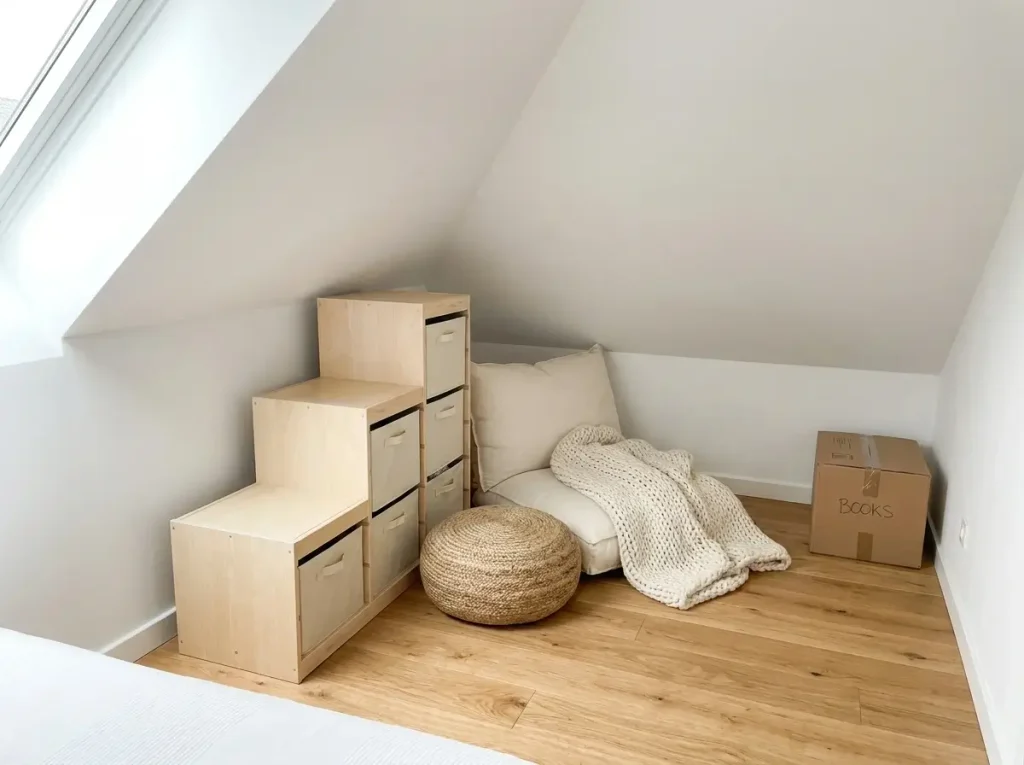
One of the smartest investments for small attic bedroom sloping ceilings is a set of modular cube organizers. Instead of stacking them into a tall square, you can arrange them in a “stair-step” configuration to perfectly match the ceiling pitch.
Place the tallest stack where the ceiling is highest, and step the cubes down as the roof slants closer to the floor.
This allows you to push the storage flush against the wall, maximizing every inch of floor space. Fill the cubbies with lightweight fabric storage bins to keep folded sweaters, shoes, or accessories hidden from view.
Low-Profile Horizontal Dressers
A classic mistake in top-floor bedrooms is trying to force a tall, vertical dresser into a room with low clearance. It simply will not fit against the walls, forcing you to float it awkwardly in the center of your limited floor space.
Instead, opt for long, low-profile dressers. A wide, six-drawer horizontal dresser can often slide perfectly underneath an angled eave. By keeping your bulk clothing storage low to the ground, you visually open up the room.
Keep in mind that when it comes to optimizing your immediate sleeping area and clothing storage, you will want to use slightly different tactics near your mattress, but for bulk folded items, horizontal dressers are unmatched.
Rolling Carts for Deep Eaves
Sometimes the angles in small attic bedroom sloping ceilings are so severe that the area where the roof meets the floor is essentially a dark, unusable tunnel. How do you store items there if you cannot easily reach them?
The answer is rolling storage carts. By utilizing low carts on caster wheels, you can pack away bulky items and push them deep into the lowest part of the eaves.
When you need something, simply roll the cart out into the open space, grab what you need, and roll it back. This is an excellent spot for heavy items or out-of-season clothing that you do not need to access every day.
Trunks and Dual-Purpose Seating
Do not overlook the power of decorative trunks or wide storage ottomans. These low-clearance pieces look intentional and stylish when placed under a pitched roof.
They serve as excellent bulk storage for extra bedding, winter coats, or out-of-season clothing. Because they sit so low to the ground, they easily clear the slanted walls while providing a convenient spot to sit while putting on your shoes.
Standard Furniture vs. Eave-Friendly Furniture
| Standard Furniture (Avoid) | Eave-Friendly Furniture (Choose) |
| Tall 5-drawer vertical dressers | Long 6-drawer horizontal dressers |
| Rigid 6-foot bookcases | Stepped modular cube organizers |
| Deep, heavy stationary chests | Low rolling carts on caster wheels |
| Bulky wardrobe armoires | Decorative storage trunks |
Filling your room with the right freestanding items solves the problem of folded clothes and boxed goods. However, if you are living with small attic bedroom sloping ceilings, you still face a major hurdle.
While freestanding shelves are great for folded items, hanging clothes requires a much more creative approach when standard closets are missing.
Renter-Friendly Closet Hacks for Low Knee Walls
Living in a space with small attic bedroom sloping ceilings often means you have absolutely zero built-in closets. It is a frustrating and common reality for many renters. Where are you supposed to hang your bulky winter coats, long dresses, or delicate button-down shirts?
Since you cannot drill a permanent wooden closet system into the slanted walls, you have to get incredibly creative with temporary setups.
A common mistake is buying standard bedroom furniture and assuming it will fit, only to realize the ceiling pitch blocks it completely. Fortunately, you can easily create highly functional hanging storage using a few clever renter-friendly closet hacks tailored specifically for low knee walls.
Heavy-Duty Tension Rod Solutions
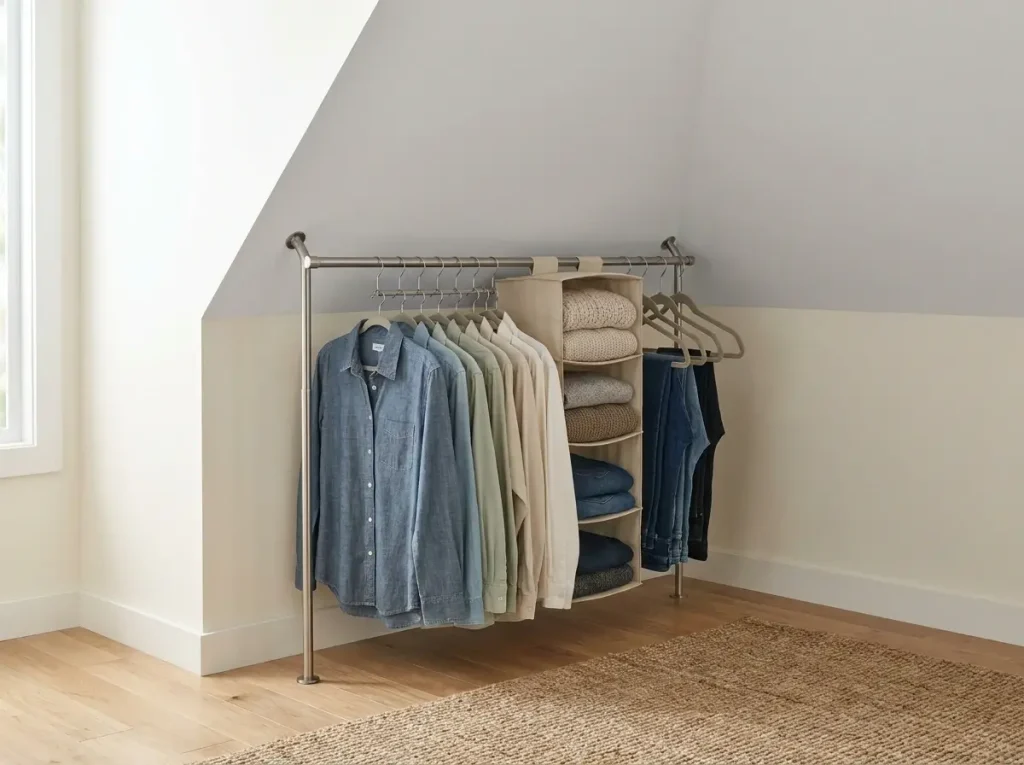
One of the most effective and affordable tricks for small attic bedroom sloping ceilings is utilizing heavy-duty tension rods. Unlike flimsy shower curtain rods, industrial-strength tension rods are engineered to hold a surprising amount of weight.
Look closely around your room for dormer nooks, exposed structural posts, or any two parallel flat surfaces.
By wedging a strong tension rod tightly between these vertical anchor points, you instantly create a custom hanging closet. The best part? You achieve this without using a single screw or damaging the drywall.
To safely secure a heavy-duty tension rod without scraping the landlord’s paint, follow these simple steps:
- Measure carefully: Find the exact width between your two flat vertical surfaces before purchasing a rod.
- Protect the walls: Place rubber or silicone grip pads on each flat end of the rod to prevent scuffing.
- Secure the fit: Extend the rod until it is tightly wedged, checking with a small bubble level to ensure it is perfectly straight.
- Test the limits: Gently test the weight capacity with a few heavy coats before hanging your entire wardrobe.
This simple tension rod method allows you to take advantage of awkward, recessed alcoves that would otherwise sit completely empty.
Adjustable Garment Racks and Vertical Hacks
If you simply do not have two parallel walls to support a tension rod, your next best option is an adjustable, freestanding garment rack.
Standard tall garment racks will usually hit the ceiling in a slanted room, making them useless. Instead, you must look specifically for heavy-duty racks featuring adjustable height poles.
You can lower the rack to match the exact height of your lowest knee wall. This precise adjustment allows you to tuck your hanging clothes securely under the eaves, keeping the valuable center of your room completely clear.
Organizing small attic bedroom sloping ceilings always requires you to think vertically, even when your vertical space is strictly capped.
To maximize the vertical drop on a shorter, lowered garment rack, start using cascading hangers immediately.
These tiered, space-saving hangers allow you to hang five or six garments in the vertical space of a single shirt. This keeps the bottoms of your longer clothes from dragging awkwardly on the dusty floor.
Finally, hanging soft canvas organizers from your portable clothing rack is an excellent way to create “shelves” out of thin air.
Instead of trying to force another bulky wooden dresser under the pitch of the roof, these lightweight fabric shelves attach directly to your hanging rod via velcro. They are absolutely perfect for storing folded jeans, thick sweaters, or an expanding shoe collection.
When your lease eventually ends, these soft canvas organizers simply collapse down completely flat.
This makes them the ultimate temporary storage solution for small attic bedroom sloping ceilings. You gain all the organizational benefits of a custom-built closet without ever putting your hard-earned security deposit at risk.
Furniture Layouts for Small Attic Bedroom Sloping Ceilings
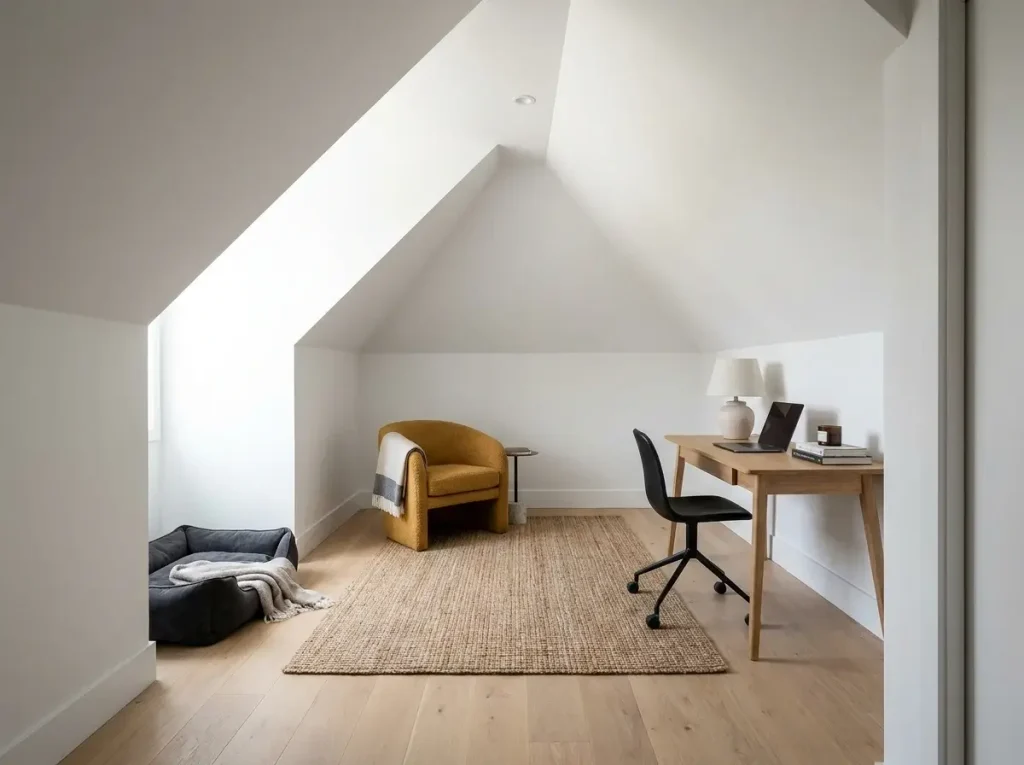
Planning a floor map in a traditional apartment is usually just about maximizing walking space. However, when you are working with small attic bedroom sloping ceilings, floor planning becomes a strict game of head clearance.
You cannot just measure the floor; you must carefully map out the varying heights of the ceiling above it.
Standard interior design advice often tells you to push large furniture tight against the perimeter walls to open up the center of the room. In an attic, doing that guarantees you will constantly bump your head.
You have to rethink your spatial strategy completely and work with the architecture you have.
Floating Your Furniture
The most valuable real estate in a room with small attic bedroom sloping ceilings is the very center. This is exactly where the pitched roof peaks and where you can comfortably stand up straight.
Instead of forcing your seating or main workstation to the dark edges of the room, start floating your furniture in the middle. Place your reading chair or small loveseat near the highest point, anchoring it with a cozy area rug rather than relying on a wall.
By moving your main living areas into the center, you create safe, comfortable walking paths. You can then reserve the tight perimeter areas exclusively for the low-profile storage bins, tension rods, and rolling carts we discussed earlier.
Matching Activity to Ceiling Height
The secret to mastering small attic bedroom sloping ceilings is matching your daily activities to the available vertical space. You should never place a standing activity under a dangerously low ceiling.
Push your absolute lowest-clearance items into the deepest, tightest corners. Pet beds, casual bean bag chairs, and floor-level shoe racks are perfect for these awkward dead zones.
Because you only interact with these items while bending down or sitting directly on the floor, the severe lack of headroom is not an issue.
Creating distinct functional zones based on ceiling height rather than just floor space is a game changer for renters.
Once your furniture is safely placed where it makes the most sense vertically, you can explore using visual dividers to separate your zones without ever needing to build physical walls.
When it comes to working from home under a pitched roof, positioning your desk correctly is absolutely critical.
A common mistake is placing the desk so that your back is to the slanted wall. When you push your office chair back to stand up, you immediately hit your head on the low slope behind you.
Instead, position your desk so that you face the sloped wall while sitting down. This simple flip keeps the higher ceiling directly behind you, providing plenty of safe clearance when you stand up and walk away.
Do’s and Don’ts for Desk Placement Under Slopes:
- DO push the back edge of your desk deep into the short knee wall to save floor space.
- DON’T place your computer monitor so far back that the ceiling slope blocks the top of the screen.
- DO sit facing the slant, ensuring the highest peak is directly behind your chair for standing.
- DON’T put tall, rigid filing cabinets next to the desk if they block your elbow room under the eave.
Organizing the physical layout of small attic bedroom sloping ceilings is crucial for your daily comfort and safety. But once the physical furniture is in place, organizing the visual space is the next step to make the room feel twice as large.
Visual Tricks to Elongate Small Attic Bedroom Sloping Ceilings

Once you have tackled the physical storage, dealing with small attic bedroom sloping ceilings becomes a visual challenge. The sharp angles and low clearance can often make a top-floor space feel like a dark cave, especially if the landlord painted the walls a dull, flat color.
Because you are renting, you cannot simply hire a contractor to install bright skylights or repaint the entire room in bright white.
However, you can employ several renter-friendly aesthetic tricks to visually elongate the walls and make the room feel much less oppressive. The primary goal is to draw the eye upward and push the heavy shadows out of the corners.
Drawing the Eye Upward
One of the best visual tricks for small attic bedroom sloping ceilings is utilizing temporary, vertical-striped peel-and-stick wallpaper. Instead of trying to wallpaper the slanted ceiling itself, apply it strictly to the flat gable walls. These are the triangular walls at the far ends of the room.
The vertical lines naturally force your eyes to look upward toward the highest peak of the ceiling. This creates a powerful optical illusion that makes the entire room feel taller and much more breathable.
Always test a small patch of wallpaper first in an inconspicuous area to ensure it removes cleanly without damaging your rental property’s drywall.
Strategic Uplighting and Light Reflection
Dark shadows are the enemy when decorating small attic bedroom sloping ceilings. Standard overhead lighting often fails to reach the lowest edges of the room, leaving the tightest angles swallowed in complete darkness.
Instead of relying solely on a single ceiling fixture, place floor-based uplighting directly in the deepest corners.
Small canister lights work perfectly for this. Angling these floor lights to wash the sloped walls in a soft glow instantly blurs the hard architectural lines and makes the low ceiling recede visually.
To double the impact of that uplighting, lean tall, oversized floor mirrors securely against the highest flat wall in the room.
While large mirrors are a standard design tip, their specific job in an attic is to reflect ambient light directly into those dark sloped eaves. This bounce-lighting effect transforms shadowy, cramped dead zones into bright, inviting spaces.
Elevating Your Window Treatments
Finally, pay close attention to your dormer windows. Heavy, dark curtains will instantly weigh down small attic bedroom sloping ceilings, making the walls feel heavy and close.
Instead, keep your window treatments light, sheer, and incredibly airy so natural sunlight can pour in freely.
Mount these sheer curtains as high as physically possible to fake taller windows. If your dormer windows have awkward alcoves that prevent traditional curtain rod installation, use heavy-duty tension rods.
This prevents hardware damage and keeps your security deposit completely safe while still giving you privacy.
When hanging lightweight decor and curtains in a rental, having the right temporary hardware is absolutely essential.
Best Renter-Friendly Hardware for Attic Decor:
- Damage-free picture hanging strips: Perfect for securing the top edges of leaned floor mirrors to the wall to prevent accidental tipping.
- Clear adhesive hooks: Ideal for hanging sheer, lightweight curtain rods without drilling into the historic plaster or drywall.
- Heavy-duty tension rods: The absolute safest option for hanging window treatments inside recessed dormer window frames.
- Cable management clips: Use these small adhesive clips to neatly run extension cords along the baseboards for your floor-based uplighting, keeping the floor clear.
Portable Decor Strategies for Frequent Movers
Organizing any living space requires effort, but doing it knowing you will have to pack everything up again in a year adds an entirely different layer of stress.
When you are a renter dealing with small attic bedroom sloping ceilings, moving day is notoriously difficult. Navigating tight corners, steep staircases, and awkward low-clearance zones with heavy furniture is a recipe for damaged drywall and lost security deposits.
To make your life easier, everything you bring into your angled space should be intentionally portable. Your organization strategy must prioritize flexibility just as much as aesthetics.
The Power of Collapsible Storage and Flat-Pack Furniture
One of the smartest portable decor strategies is investing exclusively in lightweight, collapsible fabric storage bins rather than heavy wooden crates or rigid plastic tubs. When empty, these fabric bins fold completely flat, taking up virtually zero space in a moving truck.
While you live in the space, they slide seamlessly under the lowest eaves of your small attic bedroom sloping ceilings, keeping your belongings hidden without adding unnecessary weight to the room.
Similarly, any structural storage you buy should be easy to disassemble. Using flat-pack furniture that breaks down quickly without stripping the screws is absolutely essential for frequent movers.
Avoid anything that requires wood glue or complicated permanent brackets. You want modular pieces that can be taken apart with a simple hex key, making it effortless to carry them down a steep flight of stairs when your lease ends.
Choosing Soft, Flexible Decor
Your decorative choices also play a massive role in how easily you can relocate. Choosing soft, flexible decor items—like plush floor cushions, woven poufs, or oversized knit throws—is a brilliant strategy.
Unlike fragile wooden side chairs or heavy ottomans, these soft items can literally be squeezed into the remaining empty gaps in your moving boxes.
They also serve a practical purpose while you live there, providing low-to-the-ground seating that keeps your head safely away from the pitched roof.
In fact, if you need more ideas on carrying lightweight decor and flexible seating up narrow stairs, these soft furnishings are the absolute best place to start. They combine cozy aesthetics with unmatched portability.
Mapping Your Layout for the Next Move
Finally, surviving life with small attic bedroom sloping ceilings means learning to adapt your furniture to odd shapes. But what happens when your next apartment has a completely different layout?
This is why keeping a simple inventory of how your modular cubes fit the slope is so valuable. Take a quick photo of your stair-step cube configuration or jot down a quick diagram of how your rolling carts fit under the lowest knee walls.
Because your storage is modular, you can easily adapt the exact same pieces to fit a flat wall or a narrow closet in your next rental.
Moving Day Prep for Attic Renters:
- Empty the eaves first: Pull all your rolling carts and collapsible bins out from under the slopes before disassembling larger furniture.
- Fold it flat: Collapse all canvas hanging organizers and fabric bins to save premium box space.
- Bag your hardware: Tape a small plastic bag containing all screws and hex keys directly to the underside of your flat-pack furniture.
- Protect the corners: Wrap the sharp edges of any low-profile dressers to prevent gouging the drywall under your small attic bedroom sloping ceilings on your way out the door.
By embracing portable, lightweight strategies, you ensure that your beautiful organizational system never becomes a burden when it is time to move on to your next apartment.
Conclusion
Dealing with small attic bedroom sloping ceilings does not have to be a frustrating experience, even if you are restricted by a strict lease.
By relying on modular storage, clever tension-rod hacks, and strategic furniture placement, you can create a highly functional room without making a single permanent change.
Remember to utilize the lowest corners for deep storage and keep your standing areas securely in the center of the room.
If you want to explore more ways to elevate your entire layout, check out our guide on optimizing your overarching loft space. Start by measuring your lowest knee wall today, and find a freestanding bin or cart to reclaim that wasted space.
2 thoughts on “Renter-Friendly Organization for Small Attic Bedroom Sloping Ceilings”