
Getting those first orders can feel like trying to drink from a firehose. Suddenly, you are drowning in military acronyms and shipping weight charts.
It is a common problem: the Department of Defense processes hundreds of thousands of permanent changes of station every year, but your first one always feels uniquely chaotic. We know how overwhelming the initial shock can be.
That is why understanding the system is your best defense against relocation stress. This guide cuts through the noise. You will find practical, actionable first PCS move tips to help you take control of the process, protect your belongings, and settle into your new installation.
Decoding the Jargon: First PCS Move Tips for Military Acronyms

Stepping into the military relocation world means learning an entirely new language. The Department of Defense loves its abbreviations, and without a translation guide, planning your transition can feel nearly impossible.
One of the best first PCS move tips we can offer is to master the acronyms early. Let’s break down the most critical terms you need to know before you even start packing a box.
The Power of Official Orders
Before we touch on moving trucks, we need to talk about “Orders.” This is the single most crucial document in your military relocation journey.
Simply put, orders are the official, finalized directives that authorize and fund your move. A common mistake many families make is jumping the gun before having orders in hand. It is incredibly tempting to start making arrangements as soon as you hear a rumor about your next duty station.
However, you cannot officially book government movers or legally break a housing lease without hard-copy orders. Under the Servicemembers Civil Relief Act (SCRA), you have significant protections for terminating a lease without penalty, but property managers will require a copy of the actual document. You might receive a verbal notification first, but wait for the officially funded paperwork before taking action.
Core Shipment Terms to Know
Once the paperwork is in hand, you will start figuring out how your belongings are actually getting from point A to point B. Understanding these three core shipping options is another of the vital first PCS move tips to keep your stress levels low:
- HHG (Household Goods): This makes up the bulk of your belongings. When you opt for a government move, contracted professionals will pack, load, and transport your HHG to your next installation.
- UB (Unaccompanied Baggage): Think of this as your expedited shipment. Often used for overseas moves, this is a much smaller weight allowance for essential items—like uniforms, basic cookware, and cribs—that arrive faster than your main HHG shipment.
- PPM (Personally Procured Move): Formerly known as a DITY (Do-It-Yourself) move. In a PPM, you are entirely responsible for packing, renting the truck, and driving. The military reimburses you based on the weight you move. Many service members find this is a great way to make a little extra money if they are willing to do the heavy lifting.
Geography Matters: CONUS vs. OCONUS
Where you are moving dictates exactly how your logistical puzzle pieces fit together. The military divides the world into two primary geographical buckets.
CONUS (Continental United States): This refers to any relocation within the 48 contiguous states. These moves are generally straightforward, often involving a moving truck driving from your current home directly to your new zip code.
OCONUS (Outside the Continental United States): This category includes Hawaii, Alaska, and all international duty stations (like Germany, South Korea, or Japan).
OCONUS relocations are vastly more complex. They involve shipping your belongings via ocean freight, dealing with strict international customs regulations, and coordinating vehicle shipments. If your destination is overseas, securing “no-fee” government passports and researching host-country pet regulations should happen the exact moment your orders drop.
Mastering this basic vocabulary is one of the most foundational first PCS move tips you can implement. When you know the difference between HHG and UB, you can walk into the transportation office with confidence.
Choosing Your Move Type: Full-Service vs. PPM
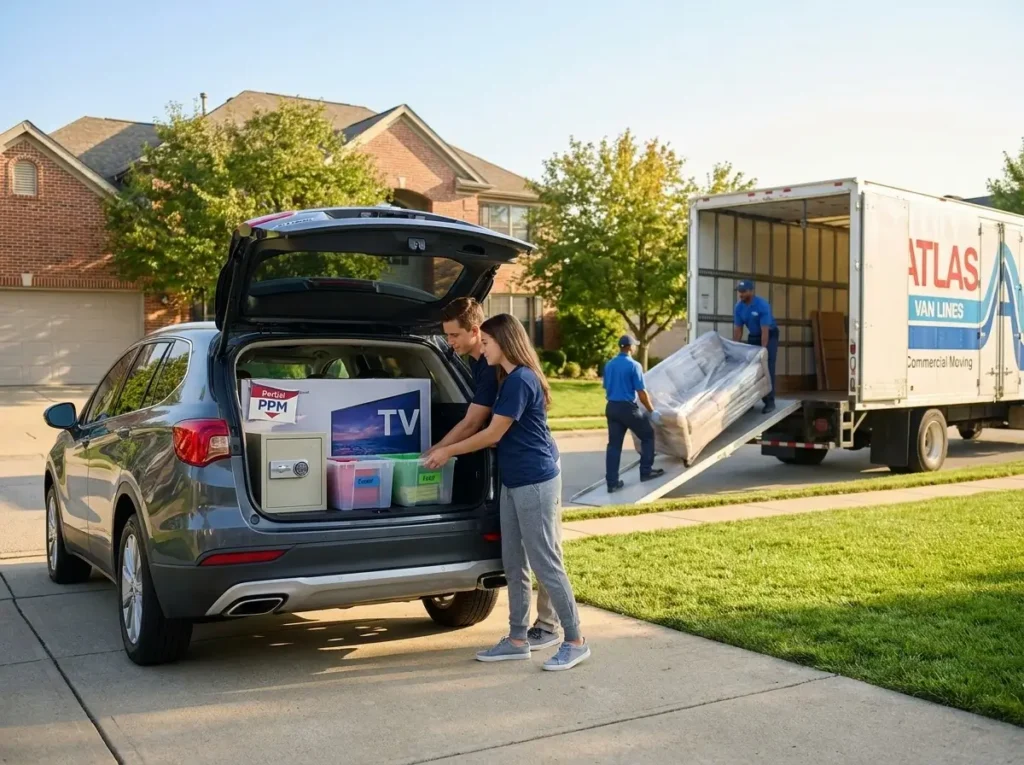
Once you decode the military jargon, the next major hurdle is deciding exactly how you want to move. This decision sets the stage for everything that follows.
In fact, one of the most critical first PCS move tips we can share is to weigh your options carefully based on your family’s bandwidth. Deciding on your move type is the very first chronological step in your relocation journey. To keep yourself on track, we recommend checking out our PCS Move Timeline Checklist for exact scheduling milestones and countdowns.
The Full-Service Government Move
For many families, a government-procured move is the most appealing path. When you let the military handle the logistics, contracted professionals manage the physical labor.
A crew will show up at your house, box up your belongings, load them onto a moving truck, and deliver them to your new duty station. You do not have to buy packing tape or rent a trailer. The primary advantage here is the massive reduction in physical exhaustion.
However, you do surrender a significant amount of control. You are at the mercy of the transportation office’s scheduling, and you cannot dictate exactly how individual items are wrapped or packed into the truck.
The Personally Procured Move (PPM)
On the other end of the spectrum is the Personally Procured Move, which many people still refer to as a DITY (Do-It-Yourself) move. Taking this approach means you are both the project manager and the laborer. You must source the boxes, pack every room, rent the moving truck, and drive it to your next installation.
The major draw of a full PPM is the financial incentive. The military reimburses you based on the total authorized weight you transport. If you move efficiently and keep your truck rental expenses low, you can pocket a considerable amount of money.
However, a crucial piece of advice within our first PCS move tips is to be brutally realistic about the physical toll. Loading a fully furnished house into a truck is exhausting work. Furthermore, you will need to pay for truck rentals and gas out of pocket before the government reimburses you. You must also remember to collect certified empty and full weigh station tickets, or your claim will be denied.
The Partial PPM: Finding Maximum Efficiency
Fortunately, it is not an all-or-nothing choice. Many experienced military renters and homeowners swear by the Partial PPM. This strategy allows you to combine both methods for a much smoother transition.
In a partial move, you let the government contractors handle the heavy furniture and the bulk of your household goods. Meanwhile, you pack your personal vehicles or a small rental trailer with your most critical items, high-value electronics, and enough living essentials to survive a few weeks.
You will still need to weigh your vehicles empty and full to submit a claim. The military will pay you for the weight you transport yourself, while still covering the cost of the main moving truck. Utilizing a Partial PPM is easily one of the most valuable first PCS move tips we can offer, giving you control over your essentials without breaking your back.
Weight Allowances: Crucial First PCS Move Tips for Packing

When you are moving your entire life across the country, it is incredibly easy to assume the military will simply ship everything you happen to own.
However, the Department of Defense operates on very strict, heavily enforced weight restrictions.
If you ignore these regulatory limits, your wallet will inevitably take a massive hit. One of our most urgent first PCS move tips is to fully understand your assigned numbers long before the contracted moving trucks ever pull up to your curb.
Understanding Your Assigned Limit
The government does not offer a blanket, one-size-fits-all shipping allowance for every service member.
Instead, the absolute maximum weight the government will ship is strictly determined by two specific factors: your current pay grade (rank) and your official dependent status.
The Joint Travel Regulations (JTR) establish these baseline allowances, which are periodically updated and scale upward as you promote through the ranks.
For example, an E-5 with dependents is authorized a completely different shipping weight than an O-3 without dependents.
It is critical to note that having a larger family does not continuously increase your weight limit.
A service member with one dependent child receives the exact same maximum weight allowance as a service member with four children.
Always check your specific written orders and consult the current JTR tables at your transportation office to find your exact entitlement before you start boxing things up.
The True Cost of Overages
What actually happens if your household goods weigh more than your authorized limit?
The military will still move the items to your next duty station, but they will eventually bill you for the excess weight.
The financial penalties for going over your assigned limit are severe.
Excess weight is billed using the same government contract rates applied to the shipment, which means an overage can quickly translate into several hundred or even thousands of dollars in out-of-pocket expenses.
Because of these steep penalties, completing a ruthless “PCS purge” is absolutely essential.
Many seasoned military families find that aggressively decluttering before the professional packers arrive is the best possible way to protect their bank accounts.
Sell the heavy dining table you no longer want, donate outgrown winter clothes, and clear out the accumulated junk in your garage.
Dedicating a weekend to a thorough purge is one of the most effective first PCS move tips for keeping your shipment weight manageable and your transition stress low.
Accurately Estimating Your Weight
You cannot effectively purge your home if you do not know where your household currently stands. While you will not know your exact, official net weight until the moving truck crosses the certified scales empty and full, you can formulate an educated guess.
A general moving industry guideline is to estimate roughly 1,000 to 1,500 pounds for every fully furnished room in your home.
Major appliances, heavy solid-wood bedroom sets, and densely packed garage spaces will drive this number up significantly. While this room-by-room math is an excellent starting point to incorporate into your first PCS move tips planning strategy, it remains only a rough baseline.
To get the most accurate projection of your belongings, you must strictly consult the USTRANSCOM Weight Estimator Tool.
Doing this math early and frequently ensures you stay comfortably within your legal limit, completely avoiding a shocking bill upon delivery.
Protecting Valuables: Security During the Chaos
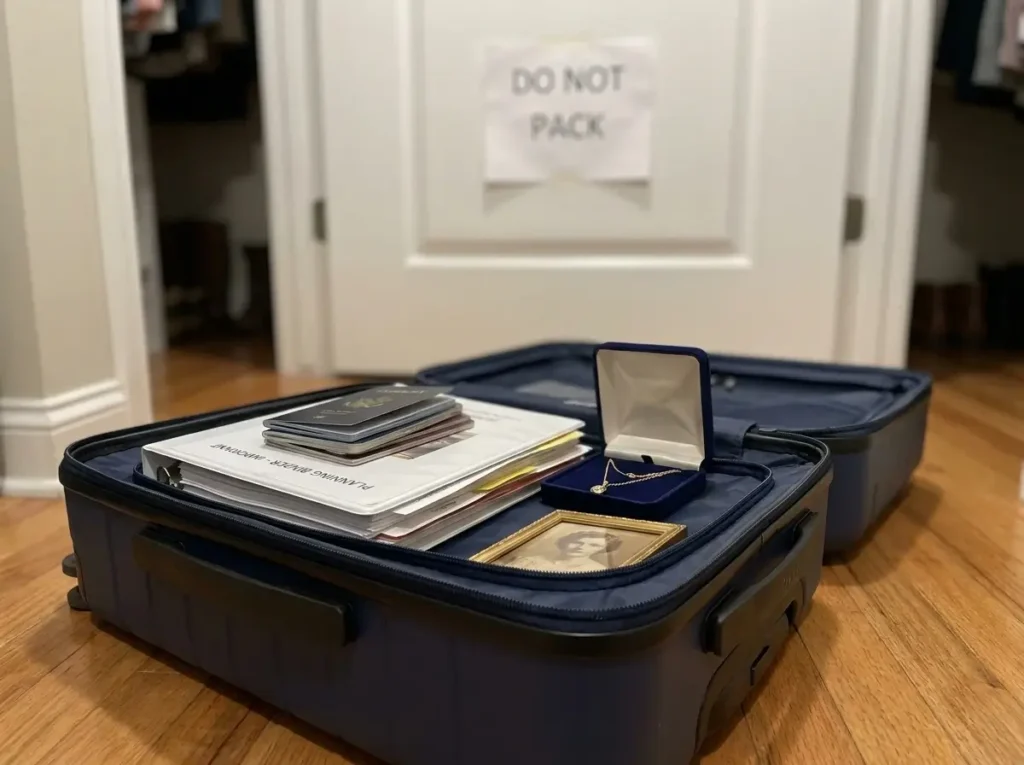
Moving day is inherently chaotic, with multiple strangers walking rapidly through every room of your home. Even with professional, background-checked packers, things can easily get misplaced, accidentally boxed up, or unfortunately, stolen.
One of the most vital first PCS move tips to remember is that you must be your own security advocate. By taking proactive steps before the moving truck ever arrives, you can ensure your most prized possessions stay safe throughout the transition.
Creating Your “Do Not Pack” Zone
When a packing crew enters your home, their job is to put absolutely everything they see into a cardboard box. If you leave trash in a wastebasket, they will likely pack the trash.
To prevent logistical disasters, you must establish a strict “Do Not Pack” zone. Many military families find success by clearing out a specific walk-in closet, a spare bathroom, or even the trunk of their personal vehicle.
Place everything you are transporting yourself into this designated space, close the door, and lock it if possible. Merely putting a sticky note or a paper sign on a pile of items is rarely enough to stop a fast-moving, efficient packing crew. Separating these items behind a physical barrier is a fundamental part of our essential first PCS move tips, as it completely eliminates the opportunity for frustrating mix-ups.
Identifying High-Risk Items
While the government allows you to file claims to cover the cost of replacing damaged or lost goods, some things simply cannot be replaced. You must aggressively identify your high-risk items long before moving week begins.
- Fine jewelry and watches: These items are small, highly valuable, and easily lost in the shuffle. Always pack these in your own suitcase and transport them yourself.
- Firearms and ammunition: While you can legally ship firearms in your household goods under certain regulations, many service members prefer to transport their weapons personally to guarantee an unbroken chain of custody. Always verify current state and local transport laws for your specific driving route.
- Cash and coin collections: Never leave physical currency out during a pack-out, as the military will not reimburse you for missing cash.
- Irreplaceable heirlooms: If your family’s antique photo album or a custom piece of artwork gets destroyed, a financial claim check will not fix the heartbreak.
If you absolutely must ship high-value items, you must ensure they are specifically documented on a High-Value Inventory sheet provided by the movers. Take clear, date-stamped photographs of these items and record their serial numbers before the packers arrive.
Managing Critical Documents
Perhaps the most common mistake made during a relocation is allowing the moving company to pack a family’s vital paperwork. Never let your passports, birth certificates, or social security cards go onto the moving truck.
If your shipment is delayed by several weeks—which happens frequently during the peak summer moving season—you will be stranded without the ability to enroll kids in school, update your driver’s license, or secure a new off-base lease. These essential documents must travel with you in your vehicle or carry-on luggage at all times.
For a complete breakdown of exactly how to safeguard these files, head over to our PCS Move Planning Binder post. Following those organizational steps is one of the smartest first PCS move tips you can execute, ensuring your identity and administrative life remain completely secure while in transit.
Navigating Housing: On-Base vs. Off-Base Realities

One of the biggest decisions you will make during your relocation is where you will actually sleep every night. Deciding between living within the installation gates or out in the civilian community is a major milestone.
A central component of our first PCS move tips is understanding that military housing is rarely guaranteed the moment you arrive. You need a solid strategy for both on-base and off-base living to avoid scrambling for a place to stay.
The Reality of the On-Base Waitlist
Many new service members assume that living on base is automatic, but that is rarely the case. Today, the vast majority of military family housing is managed by private companies through the Military Housing Privatization Initiative (MHPI).
When you apply for on-base housing, you are typically placed on a waitlist based on your rank, dependent status, and the date your application is considered complete. A common pitfall is expecting to walk straight into a house upon arrival. Depending on the installation and the time of year, waitlists can range from a few weeks to well over a year.
If you do secure a home on base, the financial transaction is straightforward. The privatized housing company will take your exact Basic Allowance for Housing (BAH) amount as your monthly rent, which generally covers standard utilities and maintenance. While this is incredibly convenient, it means you will not pocket any extra housing money, even if you receive a promotion that increases your BAH rate.
Utilizing Your BAH Off-Base
If you choose not to live on the installation—or if the waitlist is simply too long—you will live in the local civilian community. To help you afford this, the military provides a non-taxable monthly stipend known as the Basic Allowance for Housing, or BAH.
Your specific BAH rate is calculated using three factors: your pay grade, your dependent status, and the zip code of your new duty station. The most critical of our first PCS move tips regarding off-base housing is understanding how to leverage this allowance.
If you find a rental home or purchase a house with a monthly payment that is lower than your BAH rate, you get to keep the financial difference. Conversely, if you choose a home that costs more than your allowance, that extra expense comes directly out of your own pocket. Because rates are updated every January based on median local housing costs, always check the current year’s tables at the Basic Allowance for Housing before setting your budget.
Researching the Local Area Like a Pro
Moving off-base requires significant independent research. You cannot rely on the military to vet the neighborhoods for you.
When searching for a civilian rental or a home to buy, look far beyond just the square footage. Many renters find that the daily commute ruins an otherwise perfect home.
- Calculate gate traffic: Do not just look at the mileage to the base. Research the specific entry gate you will use and ask the local community about morning traffic backups. A five-mile commute can easily take forty-five minutes during peak morning physical training (PT) hours.
- Check school district ratings: If you have children, the local school zone often dictates where you must live. Cross-reference available rentals with state school ratings and base school liaison offices.
- Evaluate safety and amenities: Utilize local crime mapping websites and look for proximity to grocery stores, parks, and off-base medical care.
Incorporating these strategies into your first PCS move tips playbook ensures you are not just finding a house, but securing a functional, comfortable home for your family’s next chapter.
Mental Health and Family Readiness: First PCS Move Tips for Survival

Logistics and moving trucks are only half the battle during a military relocation. The emotional weight of uprooting your entire life is significant, and it often catches new military families completely off guard.
While most guides focus entirely on cardboard boxes and weight limits, prioritizing your family’s mental well-being is just as critical. The best first PCS move tips address both your household goods and your headspace.
Managing the Emotional Toll of Relocation
Leaving an established support system is genuinely difficult. You are saying goodbye to trusted friends, reliable childcare, and a community you know well.
It is completely normal to feel a high level of anxiety about your initial relocation. Many spouses and service members find that acknowledging this grief, rather than trying to power through it, is the healthiest way to process the change. A common mistake is expecting to feel completely settled the moment you unpack the last box.
Give yourself grace during the chaotic weeks of packing, traveling, and unpacking. Surviving the emotional rollercoaster is a completely valid goal for your first transition. Maintain open communication with your partner, and recognize that frustration on moving day is usually just stress disguised as anger.
Preparing Military Children for the Transition
If you are moving with a family, remember that children absorb the stress of the adults around them. Clear, age-appropriate communication is absolutely essential to help them navigate the upheaval.
Do not try to overly hype the move while dismissing a child’s genuine sadness about leaving their friends. Instead, try these proven strategies to ease their transition:
- Validate their feelings: Let them know it is okay to be sad or angry about moving.
- Give them a job: Allow them to pack a special “first night” backpack with their favorite toys and blankets to give them a sense of control.
- Research the new base together: Look up pictures of the new installation’s parks, bowling alleys, or local attractions to build authentic excitement.
Once you arrive, getting them plugged in quickly is one of the most effective first PCS move tips for parents. Utilize installation youth programs immediately. Connecting with the base Child and Youth Services (CYS) or enrolling them in youth sports provides an instant peer group and drastically speeds up their integration.
Leveraging Installation Resources to Rebuild
Rebuilding your village from scratch feels daunting, but you do not have to do it alone. The military has established specific readiness programs specifically designed to help you land on your feet.
The Relocation Assistance Program (RAP): Located at your Military and Family Support Center, this office is an incredible resource. They offer local area orientations and often operate a “Loan Closet.” This allows you to borrow basic kitchenware, sleeping mats, and folding tables while you wait for your moving truck to arrive.
The Military Sponsor Program: Your service member should request a sponsor from their gaining unit immediately upon receiving orders. This individual acts as your inside connection to the new base. A good sponsor can recommend safe off-base neighborhoods, explain the unit’s deployment tempo, and answer localized questions you cannot find on Google.
Leaning heavily on these established programs is a cornerstone of our first PCS move tips. They exist to ensure your family builds a resilient new community as quickly and painlessly as possible.
Conclusion
Surviving your initial military relocation comes down to preparation and flexibility. You will face unexpected delays. Things might break.
However, mastering these first PCS move tips ensures you are reacting with a plan, rather than panicking. Start organizing your essentials, communicate with your transportation office early, and embrace the adventure.
Ready to take the next step? Head over to our comprehensive timeline checklist to map out your upcoming weeks and keep your move on track.